
Videos of Guatemalan Volcanos
KAMINALJUYU Archaeological Park

The hero twins ®hoteldoslunas
KAMINALJUYU ARCHAEOLOGICAL PARK IN GUATEMALA CITY
Written by Lorena Bleker, with contribution of Dr. Mike Reed
Revised by Dr. Hector Escobedo
The archaeological site Kaminaljuyú, which means “Cerro de los Muertos” or “Hill of the Dead”, was the most important pre-Hispanic Maya city of the Guatemalan Central Highlands and it is located at the heart of Guatemala City. Kaminaljuyu hosted more than 200 mounds and 13 ball game courts, scattered over an area of 5 square km around the extinct Miraflores Lagoon, which was located where the Tikal Futura Hotel lies today in zone 11.
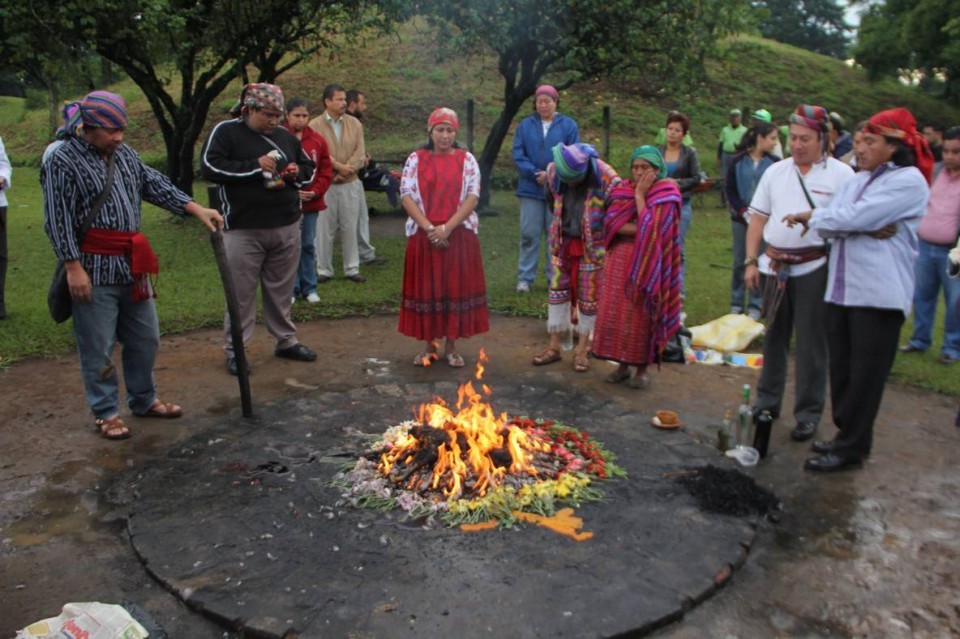
Kaminaljuyu was built on a plain and fertile valley with abundant rivers surrounded by mountains and volcanoes. A walk through the site reveals extensive plazas with large mounds, representing the remains of platforms, pyramids and ball game courts. The ball game was a ritual sport of religious significance played by the city’s elite ruler class.
Archaeological excavations at the site have revealed an impressive collection of cultural materials including ceramics vessels decorated with sea shells, carved basalt and sandstone stelae and zoomorphic sculptures of the Late Preclassic Period (400 BC-200 AD), recording important events that took place in the political, social and economic life of Kaminaljuyu.
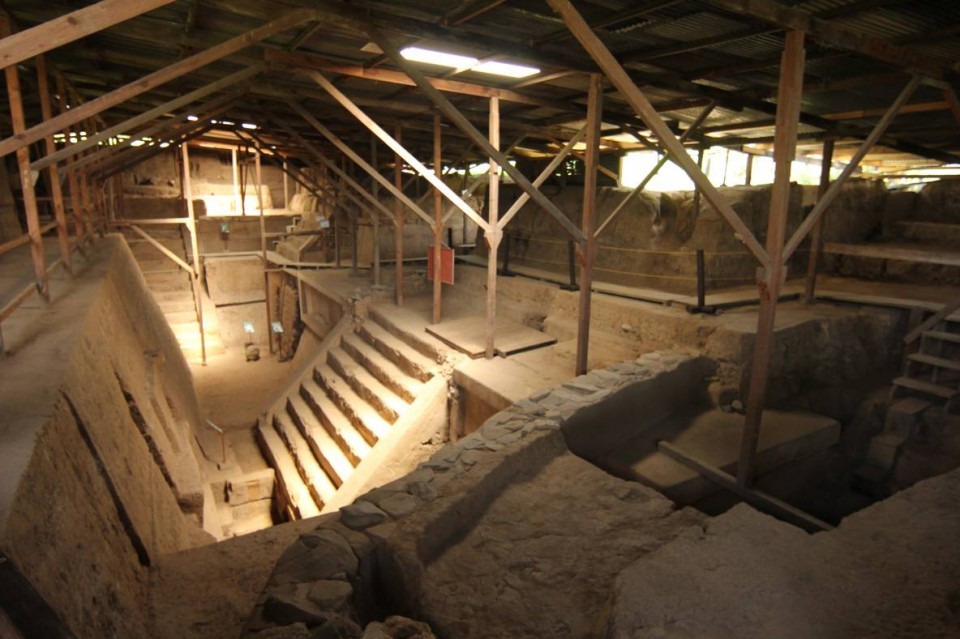
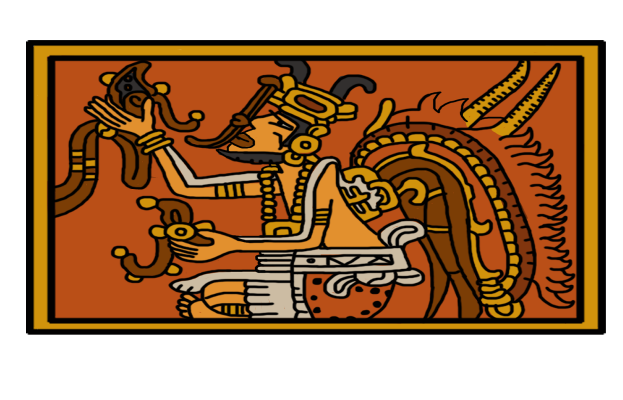
Zoomorphic monuments and sculptures, carved with iconographic elements embedded with strong spiritual meaning, represent important achievements in art and esthetic. During the Early Classic Period (200-600 AD), Kaminaljuyu had strong commercial and political ties with the powerful metropolis of Teotihuacan in Central Mexico, according to archaeological evidence found at the site. Unfortunately, during the last five decades about 90% of the ancient city of Kaminaljuyu was destroyed by the urban growth of modern Guatemala.
The Archaeological Park contains the surviving structures of the city’s central core which has been completely enclosed by modern constructions. There is also a small museum at the park. Collections of carved monuments and ceramics from Kaminaljuyu are on display at the National Museum of Archaeology and Ethnology located in Zone 13, as well as at Popol Vuh Museum in Zone 10. In addition, the small but impressive Miraflores Museum, located near the Tikal Futura Hotel, on Roosevelt Boulevard, just a few blocks from the Kaminaljuyu Archaeological Park, displays the skeletal remains of three individuals, jade ornaments, obsidian artifacts and pottery offering vessels found at the tomb of a Maya noble, recreated inside of a preserved ancient mound that can be reached through an underground tunnel. A transparent floor allows the visitor to peer at the the tomb underlying directly beneath their feet. Unfortunately, the Museo Miraflores is currently temporarily closed for renovations.
Photos courtesy of http://mcd.gob.gt
SITIO ARQUEOLOGICO DE KAMINALJUYU
Location: Calzada San Juan 30 avenida zona 7, Guatemala, Ciudad.
Business hours: 8:00 – 16:00 (Mon-Sun)
Admission:
Local visitors: Q. 5.00
Foreign visitors: Q. 50.00
Website: http://mcd.gob.gt/kaminal-juyu/ (available only in Spanish)
Museum of Archaeology and Ethnology in Guatemala City
Written by Dr. Mike Reed
As spectacular discoveries are unearthed at numerous jungle-shrouded archaeological sites of the Maya civilization, increasing numbers of foreign visitors are flocking to the tropical lowlands of Guatemala to see some of the greatest Maya cities for themselves. With so many natural and cultural wonders to experience, often overlooked is the one place in Guatemala where many of the greatest treasures of the Maya can be admired: The Museum of Archaeology in Guatemala City.
Located in one of the most convenient parts of the city, in Parque Aurora, close to hotels and the airport in zone 13, the Museum of Archaeology offers one of the finest collections of carved stone monuments and richly painted ceramics from some of the most important and powerful cities of the ancient Maya.
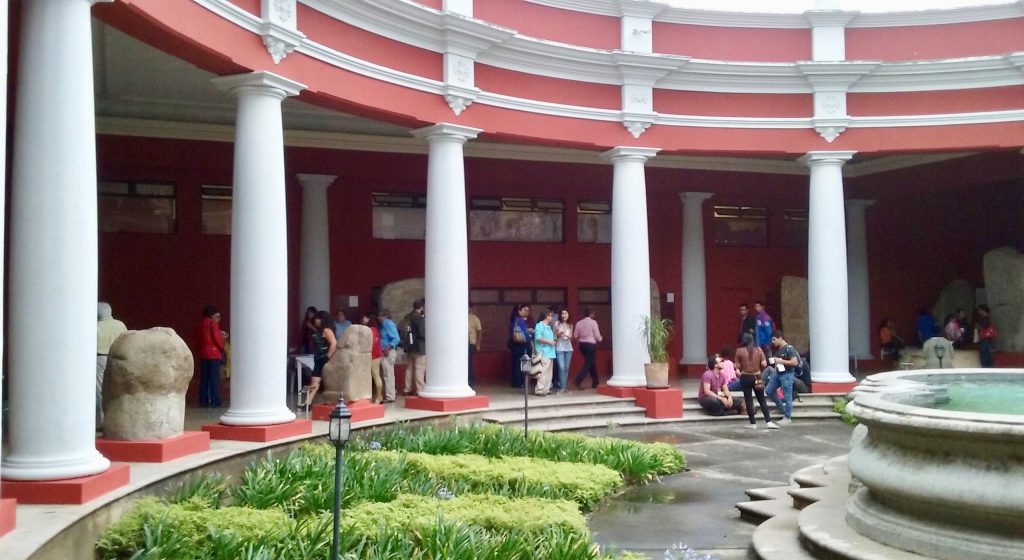
The museum is housed in an elegant older structure set around an open-air patio filled with tropical plants and a colonial fountain. Numerous tall ancient stelae, altars and panels limestone monuments carved with the likenesses of some of the greatest historical Maya rulers stand against the walls of the walkway surrounding the patio. The hieroglyphic writing on each identify these rulers and provide detailed information on historical events and the cities and individuals who shaped the story of the rise and collapse of the ancient kingdoms of the Maya.
The large exhibit halls that circle the central patio of the museum are neatly arranged to tell the story of the ancient Maya from the earliest hunters through the emergence of small agricultural communities, the development of complex societies, the growth and collapse of the kingdoms of the Maya during the classic period – the apogee of the civilization. The artifacts on display and the hieroglyphic inscriptions they contain reveal a history of the Maya with as much drama and intrigue as any of the world’s great civilizations.
The story of the Maya throughout each period of its development is provided for visitors in both Spanish and English on wall plaques and videos, dioramas, models of several important cities (like Tikal) and the artifacts themselves which are displayed in the open when large and in glass cases for smaller and delicate items. Everything on display are among the most important finds and finest examples of ancient Maya art. Also, on display in one hall of the museum are examples of the colorful traditional costumes that continue being worn in traditional Maya communities throughout Guatemala.
Special exhibitions of some of the most important and spectacular discoveries take place at the Archaeology Museum when they are announced to the world by archaeological teams. These artifacts are prominently exhibited for a period for the public and visitors to admire at no extra cost beyond the admission fee.
Guatemala’s major archaeology museum is compact due to the space limitations of the building, however the curators managed to display many of the finest and most recognizable works of art in an organized and pleasing way. The Archaeology Museum should not be missed by anyone interested in the ancient Maya civilization.
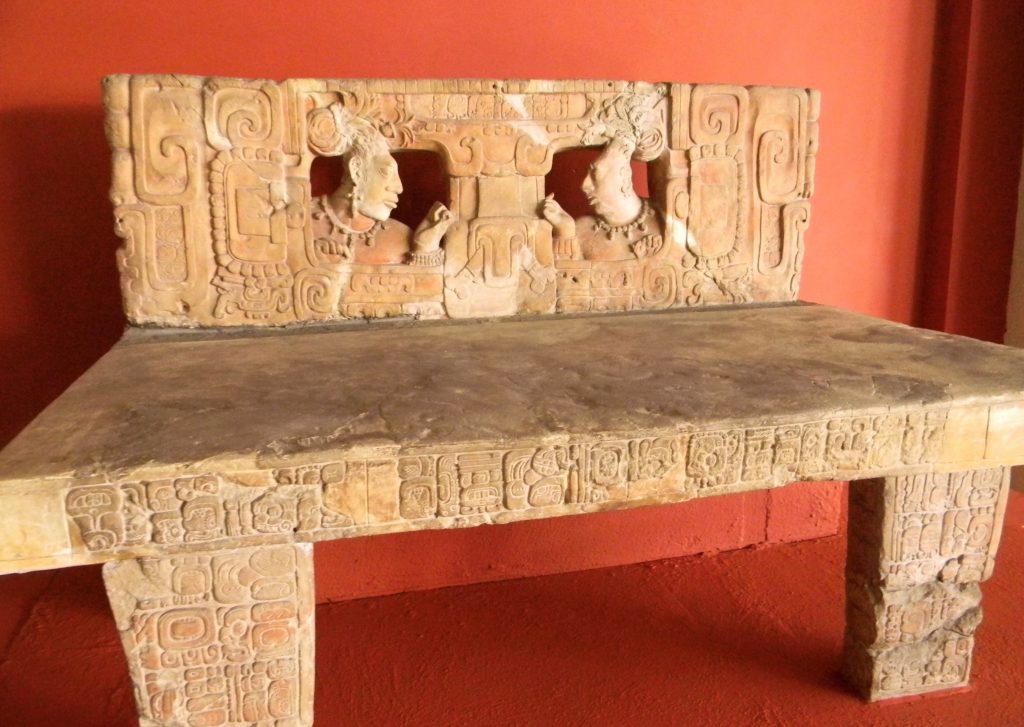
Museo Nacional de Arqueologia y Etnologia
Location: 6ª. Calle y 7ª. Avenida, Finca la Aurora, Zona 13
Business hours: Abierto: From Tuesday to Friday from 9:00 a 16:00 hrs. Saturday and Sunday from
9:00 to 12:00 and from 13:30 to 16:00 horas.
Closed: on Monday and Christmas: 24-25
de diciembre. 31 of December and 1st. of January.
Admission:
Local visitors: Q. 5.00
Foreign visitors: Q. 60.00
Website: http://www.munae.gob.gt
Private hospitals in Guatemala City


This is a short list of the best hospitals in Guatemala city where you can go in case of emergency. For immediate care,go directly to the E.R.
These hospitals accept some of the travel or health insurance,. Prior to your trip to the country, make sure to check with your insurance company which partners operates in Guatemala.
Hospitals in Zone 10
Hospital Centro Medico
6A. AVENIDA 3-47 ZONA 10 | PBX: (502) 2279-4949
Website: www.centromedico.com.gt
Emergency: ext. 1422.
Payments accepted: GTQ, USD and credit cards.
Ambulance: NO
Language: Spanish. Most of the doctors and specialists speak English
Internternational insurance accepted:
- BUPA
- TRICARE
- HENNER
Hospital Herrera Llerandi
6ª. ave 8-71 zona 10
Tel: 2384-5959
Website: www.herrerallerandi.com
Emergency: 2334-5955
Ambulance: NO
Language: Spanish, most of the doctors and specialists speak english
International Insurance accepted:
- IMA (Intermutual assistance) FRANCE.
- VANBREDA and/or CIGNA INTERNATIONAL. BELGIUM
- BEST DOCTORS. USA
- BUPA INTERNATIONAL. USA
- BMI INTERNATIONAL. USA
- DKV. GERMANY
Hospital La Esperanza
6ª. Ave. 7-49, zona 10
Tel. 2415-9000
Ext. 1325 or 1301
Website: https://www.hospitalesperanza.com/
Payments: GTQ, Credit Card, Dollar not accepted
Ambulance: Q1500.00 r/t. Q750.00 o/w
Language: Spanish. Most of the doctors and specialists speak English.
International Insurance accepted:
- BUPA USA
- BMI. USA
- CAJA FRANCESA. FRANCE
- ALLIANZ. GERMANY
- BEST DOCTORS. USA
- REDBRIDGE.
Hospitals in Zone 15
Nuestra Señora del Pilar
3ª calle 10-71, zona 15, Colonia Tecún Uman
Tel 2279-5000
Website: www.sanatorioelpilar.com
International Insurance accepted:
- AETNAINTERNATIONAL
- ALLIANZ GLOBAL ASSISANCE
- BEST DOCTORS
- BMI INTERNATIONAL
- BMI GUATEMALA
- BUPA GUATEMA
- BUPA INTERNATIONAL
- SIGNA
- HENNER
- MORGAN WHITE
- VUMI GROUP
Dentist
Dental Design
Diagonal 6, 12-42 zona 10
Edificion Design Center Torre 2 Oficina 1004
Tel. (502) 2261-8905
USA (209) 201-0454
Website: dentaldesign.com.gt
Language: Spanish and English spoken
Insurance: They are affiliated to all major insurance companies.
PRIVATE AMBULANCES

ASISTENCIA MEDICA (highly recommended)
Emergency No. 5203-0525
Webiste: https://asistenciamedica.com.gt/servicios/
Language: Spanish, English and some doctors speak German.
CARE:
Telephone: 51110000
Website: http://www.careambulancias.com.gt/servicios
Language: Spanish

Hiking Pacaya Volcano
Written by Matt Purvis (MSc)
Introduction
Want to climb a volcano in Guatemala but not sure if you have the legs for it? Then Pacaya volcano might be the hike for you. It’s a relatively short drive and relatively short hike compared with other Guatemalan volcanoes and the views at the top, for a little bit of effort to get up there, are truly spectacular!
Location
Pacaya volcano is located approximately 40km South of Guatemala City and, depending on traffic, can be reached in around an hour and a half from both the capital city and Antigua. South on the CA9 through Villa Nueva and Amatitlan and then take the turn-off to Pacaya just before Palin.
Geological History
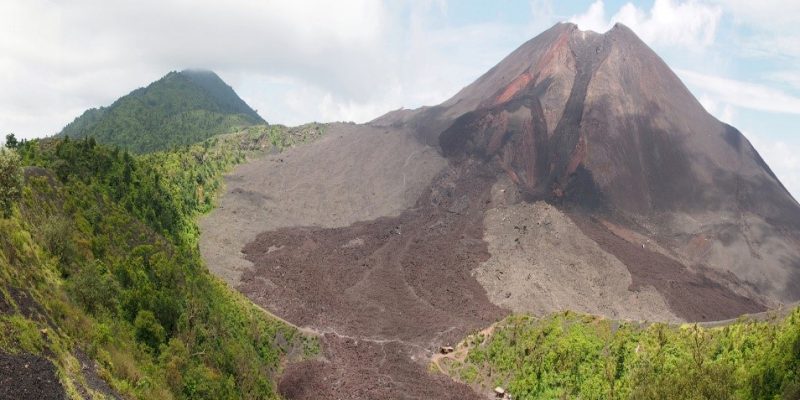
Pacaya volcano is not like most Guatemalan volcanoes, which are generally single peak stratovolcanoes. Pacaya is a volcanic complex consisting of multiple eruptive centers that have been active at different times over the last 23,000 years. A few thousand years ago the ancient Pacaya stratovolcano blew itself apart and collapsed down toward the Pacific coastal plain to leave an enormous collapse scar. This scar has subsequently been filled by the various eruptive centers that now form the peaks known as Cerro Grande, Cerro Chico, Cerro Cabra and Cerro Chino. These peaks have all been active in the recent geological past. The currently active part of the volcanic complex is the Mackenney Cone.
It’s hard to believe but the Mackenney Cone has only been active since 1961. In less than 60 years it’s reached its impressive height growing up layer upon layer of ash and lava flows. The last significant explosive eruption was in 2010. The Mackenney Cone lost height during this eruption when it partially collapsed and opened a large crater at the summit. This collapse scar and summit crater have now been nearly filled in by the more recent minor explosive and effusive lava-flow activity.

Hiking Pacaya volcano
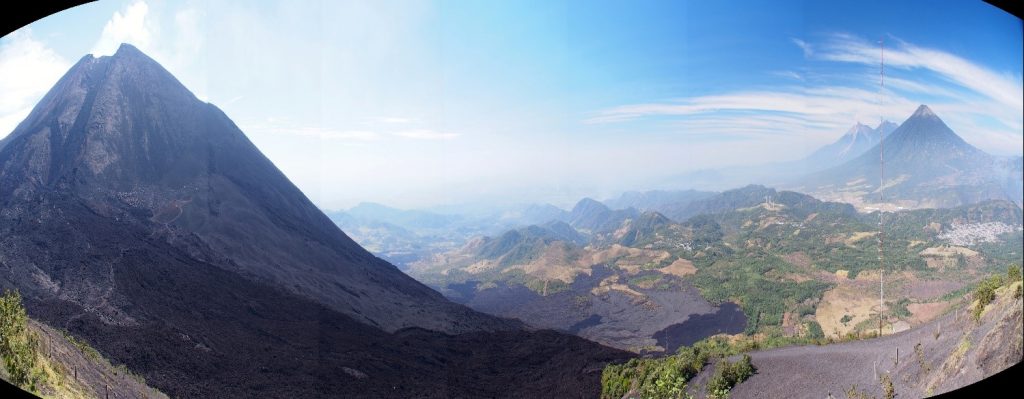
Most hikes start from the park entrance in the village of San Francisco de Sales. The well-maintained trail takes you up through cornfields and forest with well places rest stops with views of the geothermal power station, the Calderas lagoon (the small lake in the depression or caldera from of the oldest part of the volcanic complex) and Agua, Fuego and Acatenango volcanoes. On the walk up, local guides will talk about some of the local plants and customs and point out the famous Palo Hormigo; the tree from which the keys of the famous Guatemalan instrument the Marimba are made.
The hike up to the unobstructed view of the active Mackenney Cone takes just over an hour but for those who don’t want to walk a local “taxi” option is available in the form of a horseback ride. Horses can be taken just up, or on a round trip up and down. Some people stop there but most go further and walk down on to the lower flank of the Mackenney Cone and the more recent (but now mostly cooled) lava flows. In some parts there is still enough heat coming off these flows to roast marshmallows!
What to bring
Make sure you have enough water, snacks and sunscreen for a 4 hour round trip. If leaving from the park entrance in the afternoon for the sunset version of the hike, then make sure you have warm clothes and a flashlight for when the sun goes down. Most climb the volcano in sneakers but proper walking shoes or boots with a little more ankle support are always better. The loose ash can be quite slippery and the recently cooled lava flows are razor sharp so long pants provide a little more protection if you do slip and fall.
Safety first
The summit of Pacaya volcano is off-limits to tourists. The explosive activity at the top generates lava bombs that are thrown tens of meters into the air and a change in wind direction can expose you to harmful volcanic gases. With a recent increase in lava flow activity there is also the temptation to get dangerously close to active flowing lava. Pacaya’s impressive volcanic activity can be appreciated in relative safety if you follow warning signs and listen to local park rangers, without putting yourself or others in danger.
About the Author
Matt Purvis is a geologist who owns and operates Geo Travel Guatemala, the first geologically orientated tour company in Guatemala. For more information please visit GeoTravelGuatemala.com or contact Matt on (+502) 3168 8625 or Matt@GeoTravelGuatemala.com
Bird Watching in our Neighborhood Aurora II
BIRD WATCHING IN OUR NEIGHBORHOOD AURORA II
GUATEMALA CITY BIRDS
By Lorena Bleker
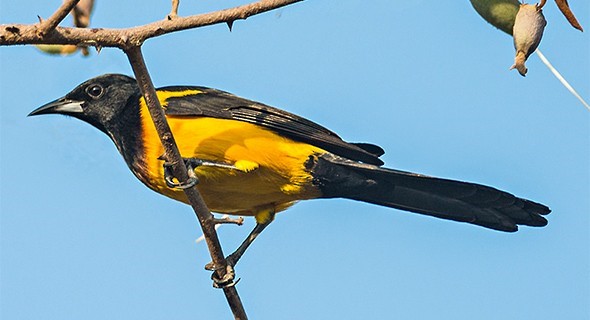
With the help from a guest that is a professional birdwatcher and biologist from Sweden, we have made a list of some of the birds that you can find, observe and enjoy in our small neighborhood Aurora II.
The observation was made in the months of February and March, but many of these birds can be appreciated most of the year and some others start to immigrate from the north around august or later…
Despite the severe biodiversity loss due to airport, massive urbanization, pollution, invasive species, habitat loss and climate change, we still enjoy of some beautiful birds in our area. We would like to help to re-connect our guests and neighbors with the natural world and raise awareness of the seriousness that biodiversity loss represents and how it affects them directly and to all of us.
For those who are birdwatchers, if you are visiting our neighborhood, and you identify another type of bird that is not on the list, please let us know and send us details so we can add it to this list. hoteldoslunas@gmail.com
GARDEN AND RAVINE BIRDS
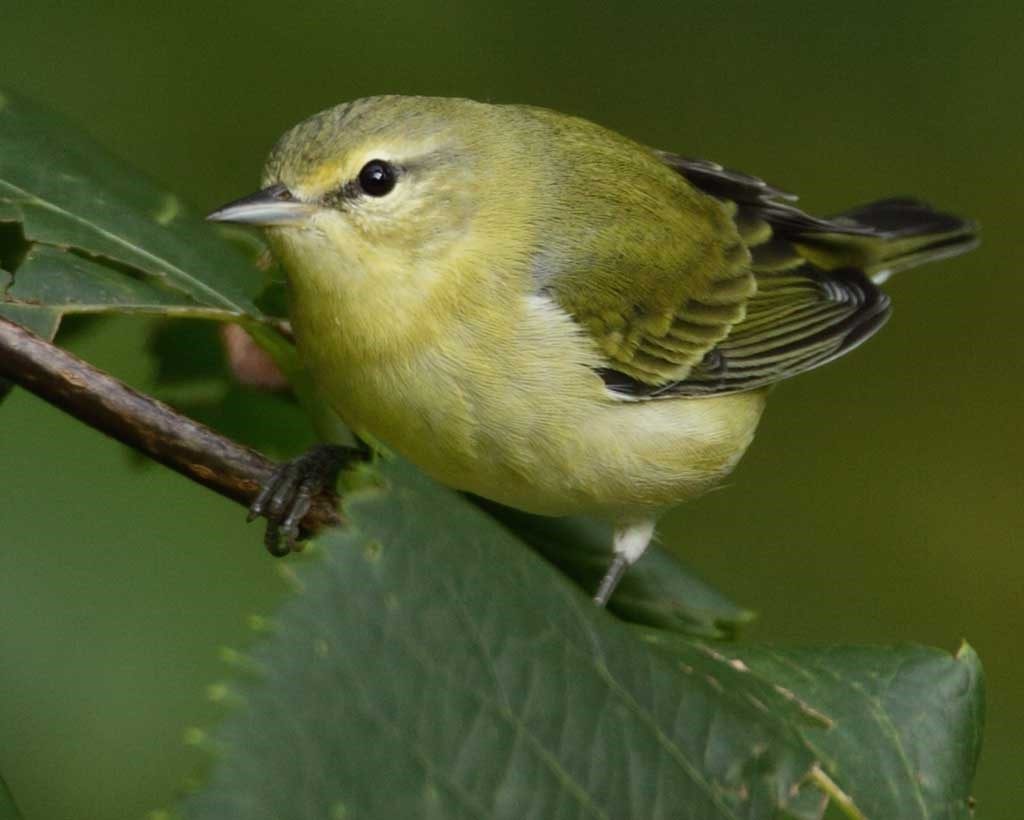
Photo By National Audubon Society www.audubon.org
Name: TENESSEE WARBLER (M)
Scientific Name: Oreotriplys Peregrina
Name in Spanish: Chipe Peregrino
Description:
The Tennessee Warblers loud, staccato song often signals the peak of spring songbird migration in eastern North America. Described by Alexander Wilson in 1811 from a migrant specimen on the banks of Tennessee’s Cumberland River, its common name belies the fact that its breeding range is restricted almost entirely to the boreal forest zone of Canada, extending into southeastern Alaska and the extreme northern fringe of the United States. Most migrants move along the eastern seaboard east of the Mississippi Valley, crossing the Gulf of Mexico to and from wintering grounds in Central and northern South America. *
*Tennessee Warbler (Oreothlypis peregrina), In Neotropical Birds Online (T. S. Schulenberg, Editor). Cornell Lab of Ornithology, Ithaca, NY, USA. retrieved from Neotropical Birds Online: https://neotropical.birds.cornell.edu/Species-Account/nb/species/tenwar
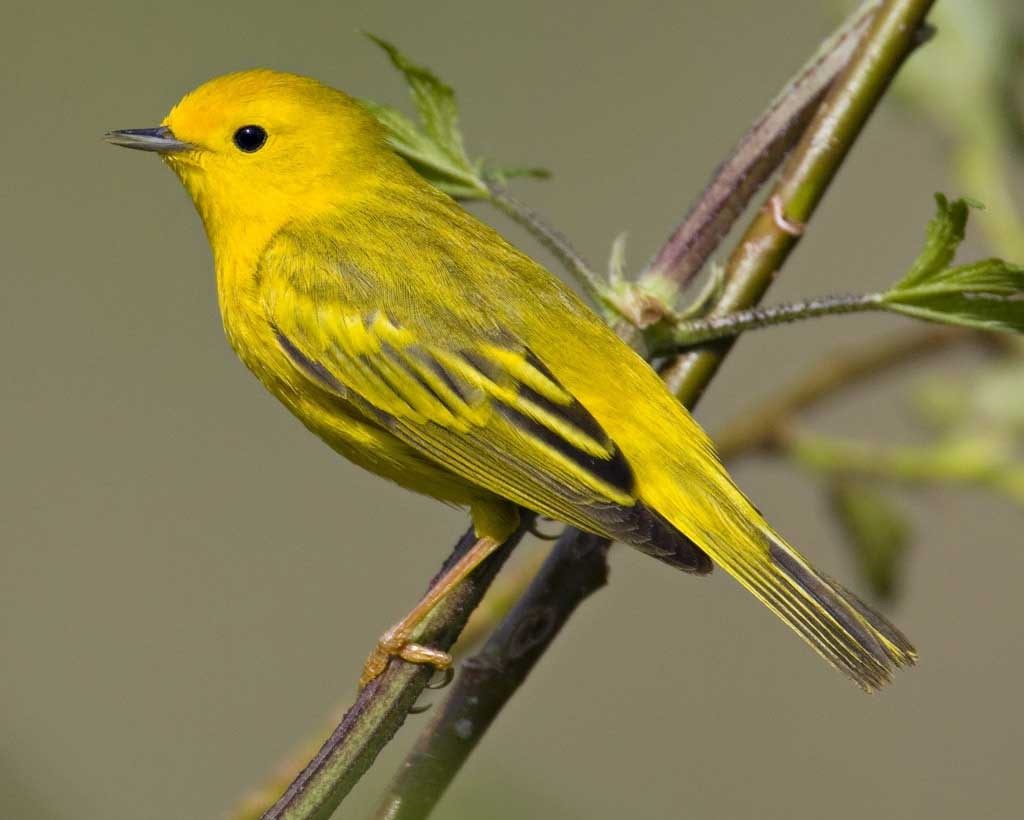
Name: YELLOW WARBLER (M)
Scientific Name: Sethopaga Petechia
Name in Spanish: Chipe amarillo
Description:
The aptly named Yellow Warbler is found throughout much of North America in habitats briefly categorized as wet, deciduous thickets. Most resident populations in the Caribbean and in Central and South America breed in mangroves, although at some sites they also occur in coastal scrub or even in montane forests. The Yellow Warbler is the most strikingly yellow among North American wood-warblers. *
This bird Migrates mostly at night. Fall migration is very early, with many moving south during August.
*Yellow Warbler (Setophaga petechia), In Neotropical Birds Online (T. S. Schulenberg, Editor). Cornell Lab of Ornithology, Ithaca, NY, USA. retrieved from Neotropical Birds Online: https://neotropical.birds.cornell.edu/Species-Account/nb/species/yelwar
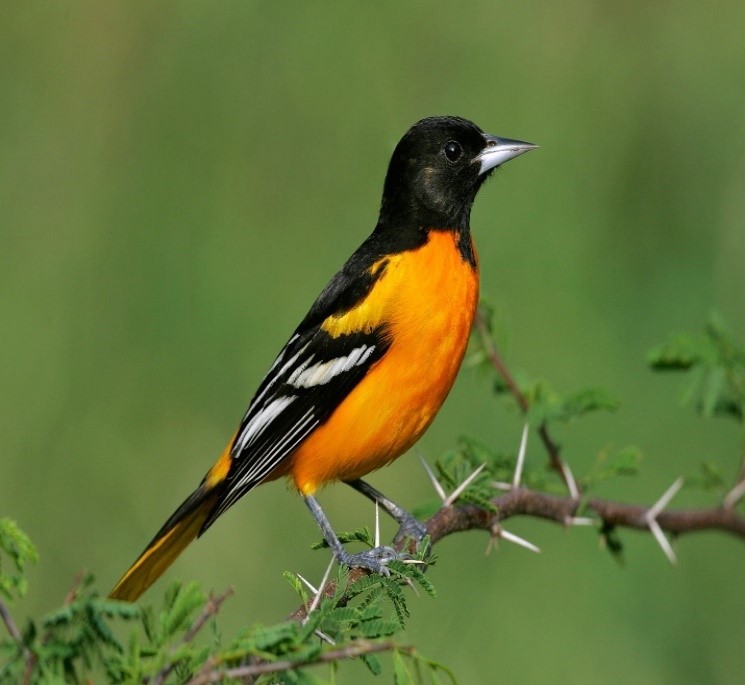
Name: ORCHARD ORIOLE (M)
Scientific name; Icterus Spurius
Name in Spanish: Bolsero castaño
Description:
Most common in the Midwest and South is this small oriole. It favors open areas with scattered groves of trees, so human activities may have helped it in some areas, opening the eastern woodlands and planting groves of trees on the prairies. Orchard Orioles often gather in flocks during migration. The black-throated young male, sitting alone in a treetop and singing his jumbled song, is often confusing to beginning birders. Migrates in flocks; many move north across the Gulf of Mexico in spring. Fall migration begins very early, with some southbound by late July.
Source: https://www.audubon.org/field-guide/bird/orchard-oriole
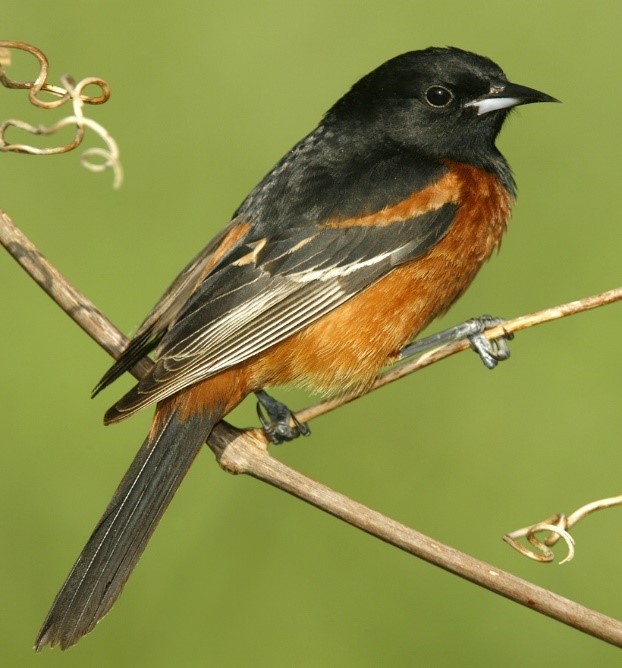
Copyright: ©Brian Small/VIREO
Name: BALTIMORE ORIOLE (M)
Scientific name: Icterus Galbula
Scientific name: Icterus Galbula
Name in Spanish: Bolsero de Baltimore
Description:
One of the most brilliantly colored songbirds in the east, flaming orange and black, sharing the heraldic colors of the coat of arms of 17th-century Lord Baltimore. Widespread east of the Great Plains, Baltimore Orioles are often very common in open woods and groves in summer
Migrates in flocks. Fall migration begins early, with many birds departing in July and August from North America to Central and South America.
Source: https://www.audubon.org/field-guide/bird/baltimore-oriole
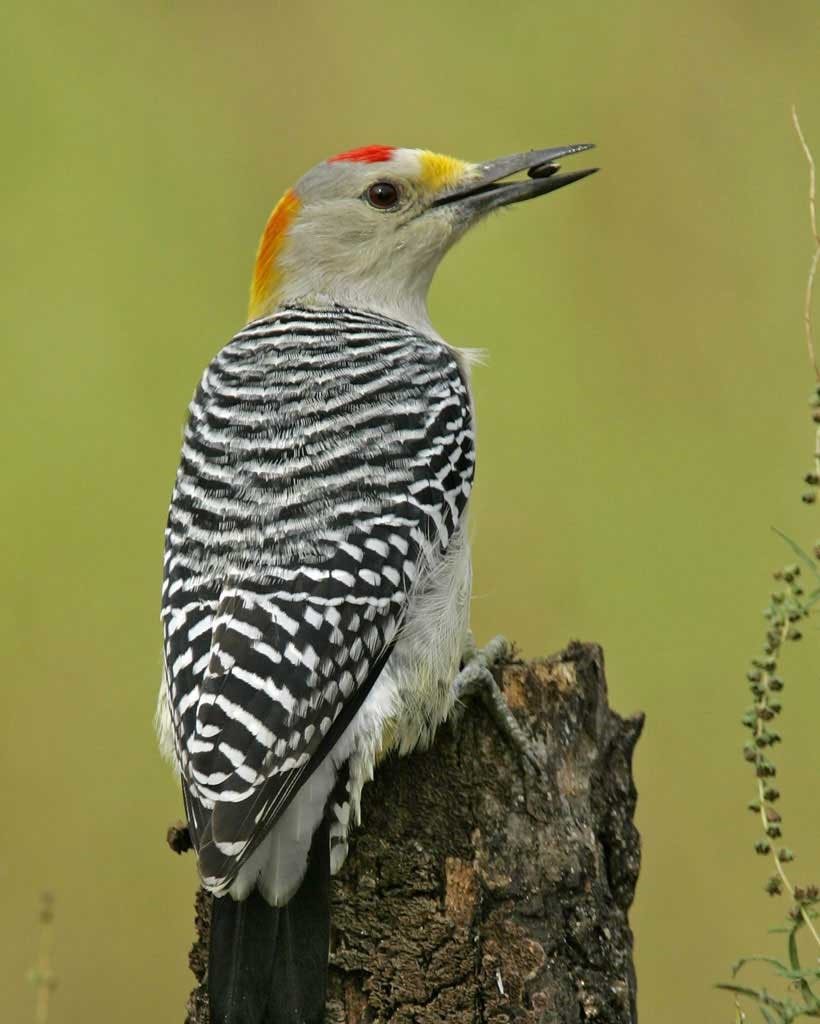
Name: GOLDEN FRONTED WOODPECKER (R)
Scientific name: Melanerpes Aurifrons
Name in Spanish: Carpintero frentidorado
Description:
A sedentary species whose distribution straddles the temperate and tropical regions of Middle America, the Golden-fronted Woodpecker ranges into the United States only to Texas and southwestern Oklahoma. *
*Golden-fronted Woodpecker (Melanerpes aurifrons), In Neotropical Birds Online (T. S. Schulenberg, Editor). Cornell Lab of Ornithology, Ithaca, NY, USA. retrieved from Neotropical Birds Online: https://neotropical.birds.cornell.edu/Species-Account/nb/species/gofwoo
© Brian Sullivan Macaulay Library ML66383931
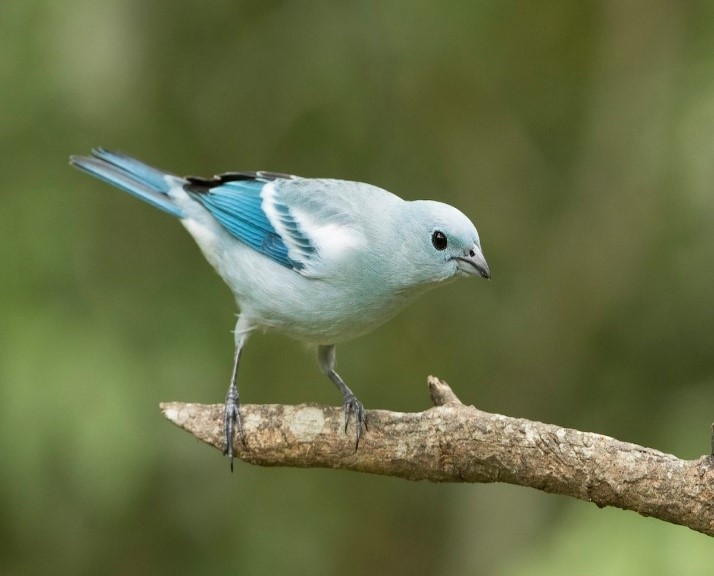
Name: BLUE-GRAY TANAGER (R)
Scientific Name: Thraupis Episcopus
Name in Spanish: Tángara azul-gris
Description:
The Blue-gray Tanager is one of the most widespread, and
ubiquitous, birds of the humid lowland neotropics. At almost any location
between southeastern Mexico and central South America, it is a familiar
presence at forest edge, in second-growth, along roads and rivers, in
plantations, and even in urban parks and gardens.
Blue-gray Tanager (Thraupis episcopus), In Neotropical Birds Online (T. S. Schulenberg, Editor). Cornell Lab of Ornithology, Ithaca, NY, USA. retrieved from Neotropical Birds Online: https://neotropical.birds.cornell.edu/Species-Account/nb/species/bugtan
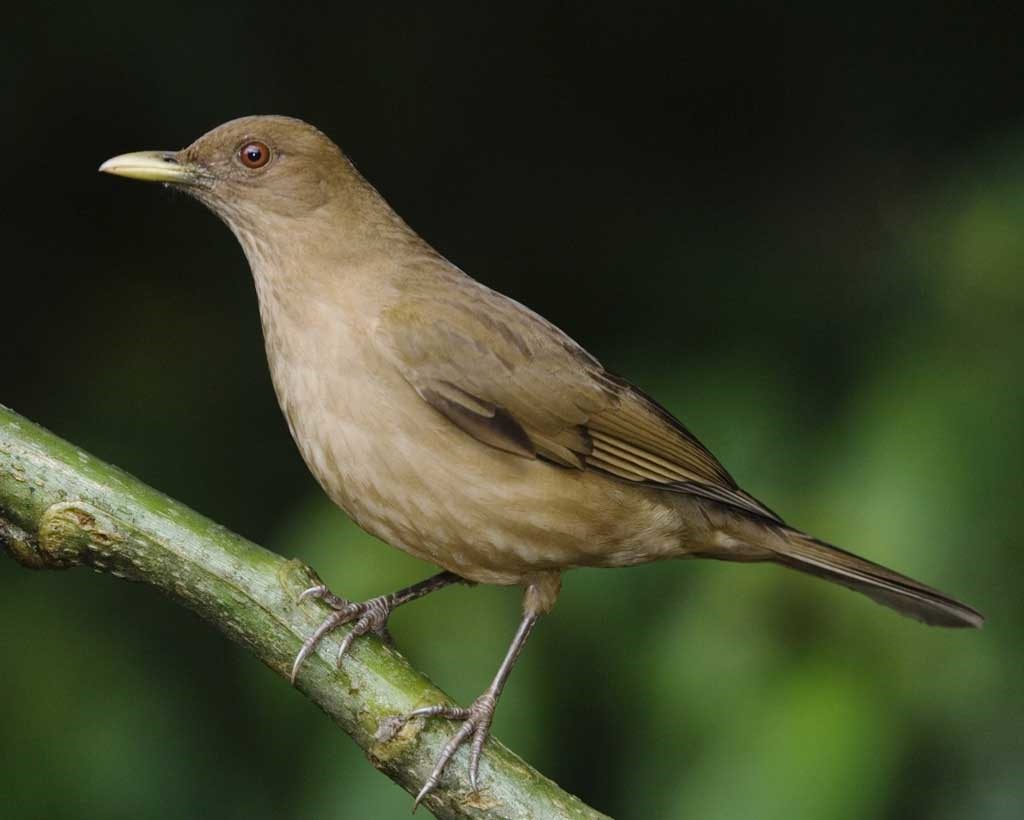
Name: CLAY COLORED THRUSH (R)
Scientific name: Turdus Grayi
Name in Spanish: Mirlo o Censontle
Description:
From eastern Mexico to northern Colombia, this plain gray-brown thrush is very common in lowland habitats, including parks and gardens. In recent years it has become a regular visitor to southernmost Texas, especially in winter, and it has even nested there several times. It was formerly called Clay-colored Robin.
Source: https://www.audubon.org/field-guide/bird/clay-colored-thrush
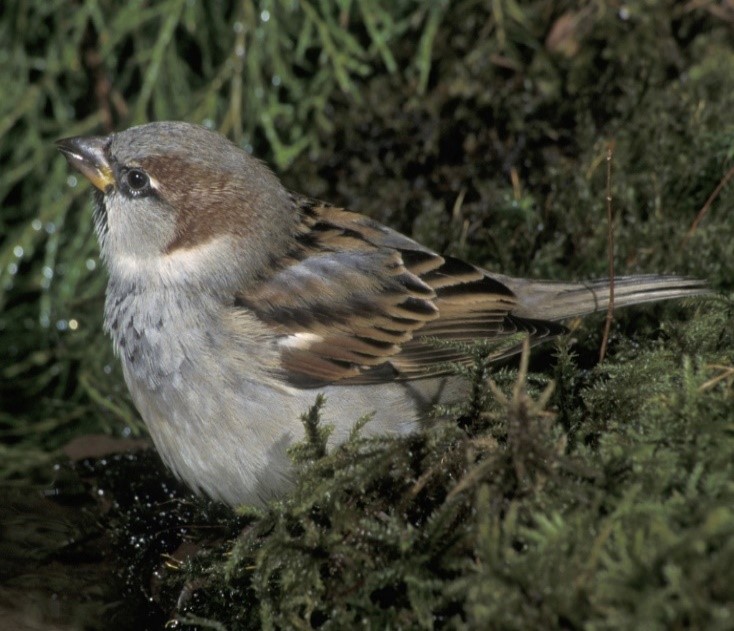
Photo By National Audubon Society www.audubon.org
Name: HOUSE SPARROW (E)
Scientific Name: Passer domesticus
Name in Spanish: Gorrion
Description:
Permanent resident over most of its range, including throughout North America. One of the most widespread and abundant songbirds in the world today. Tough, adaptable, aggressive, it survives on city sidewalks where few birds can make a living; in rural areas, it may evict native birds from their nests.
Source: https://www.audubon.org/field-guide/bird/house-sparrow
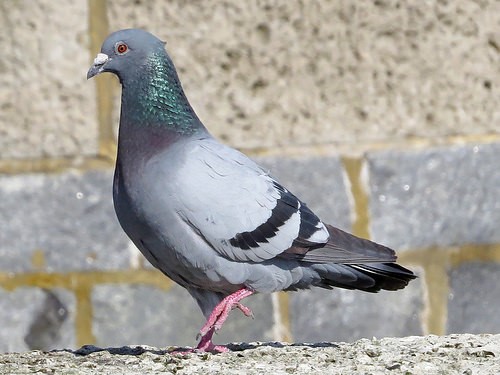
Name: FERAL PIGEON (E)
Scientific Name: Recurvirostra avosetta
Name in Spanish: Paloma
Description:
Feral pigeons are descended from the rock dove which was
originally domesticated to provide food. Feral pigeons are now found all over
the world
Rock doves have blue-grey under and upperparts and a white patch on their
rumps. There is an iridescent band of green and purple on their necks and they
have grey wings with two black wing-bars. Their eyes and legs are red.
Source and Photo: https://www.britishbirdlovers.co.uk/bird-identification/ferapigeon
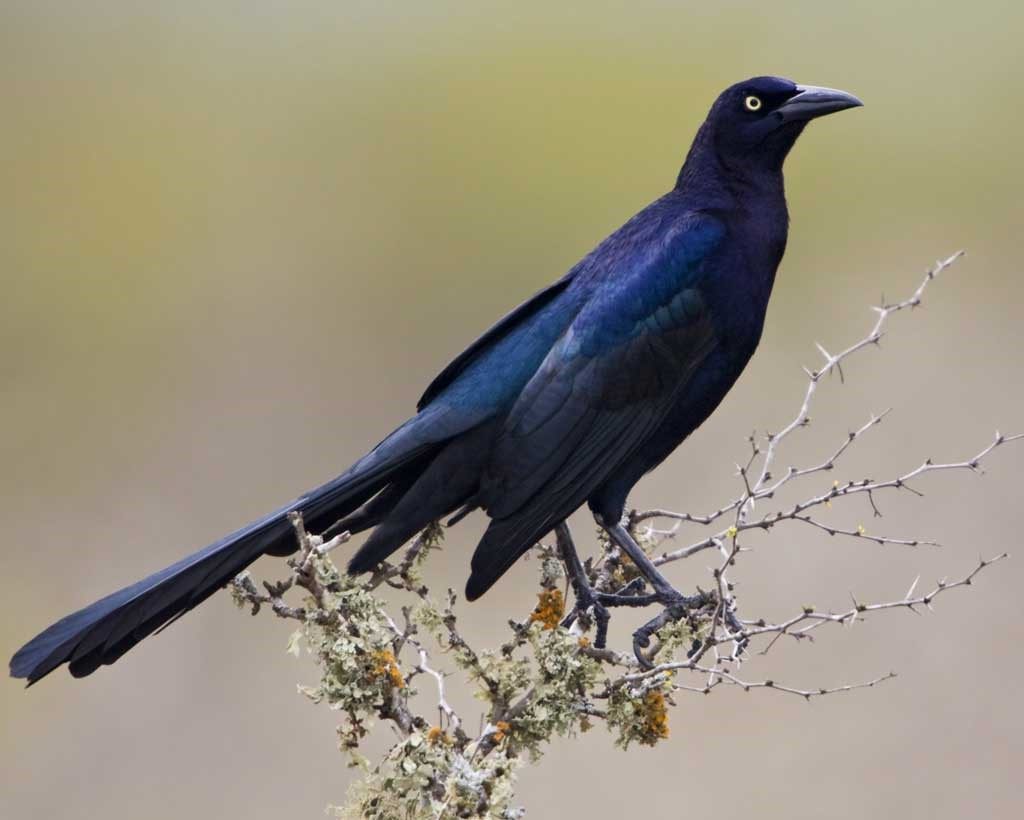
Name: GREAT-TAILED GRACKLE (R)
Scientific name: Quiscalus mexicanus
Name in Spanish: Zanate
Description: Mostly migratory in northern parts of its range; however, it has recently become a permanent resident in some areas where it formerly occurred only in summer. Wherever it occurs, this big blackbird is impossible to overlook — especially the male, with his great oversized tail and incredible variety of callnotes.
Source: https://www.audubon.org/field-guide/bird/great-tailed-grackle
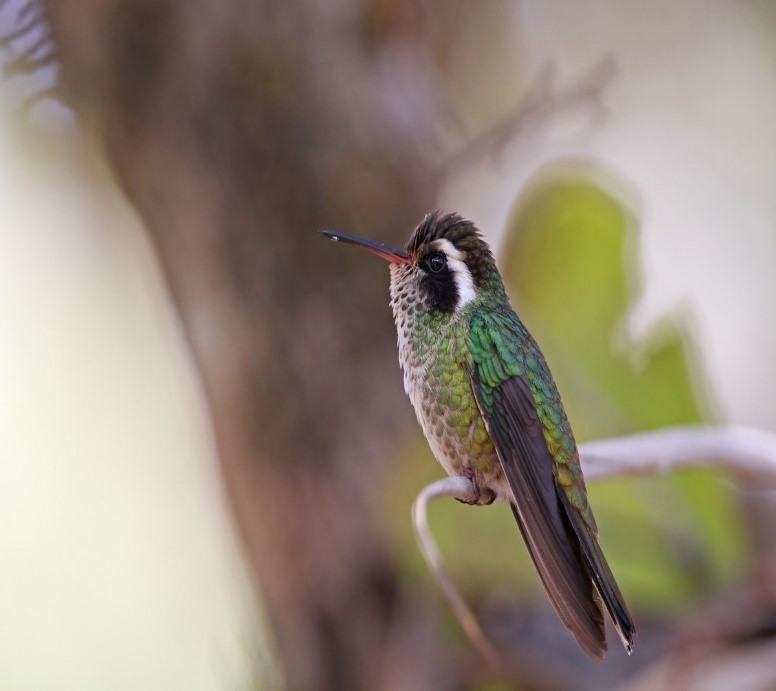
Name: WHITE-EARED HUMMINGBIRD (R)
Scientific name: Hylocharis leucotis
Name in Spanish: Colibri oregiblanco
Description:
White-eared Hummingbird occupies montane pine-oak, oak, and pine-evergreen forests from the extreme southwestern United States south to Nicaragua. These are territorial hummingbirds spend most of their time at the lower and middle levels of the forest, where they are particularly common near banks of low flowers. Both males and females have a dark cheek bordered by a long white stripe behind the eye, and both have some extent of red on the bill. Their metallic chipping song also helps identify them from similar species. *
*Arizmendi, M. d. C., C. I. Rodríguez-Flores, C. A. Soberanes-González, and T. S. Schulenberg (2015). White-eared Hummingbird (Hylocharis leucotis), version 1.0. In Neotropical Birds Online (T. S. Schulenberg, Editor). Cornell Lab of Ornithology, Ithaca, NY, USA. https://doi.org/10.2173/nb.whehum.01
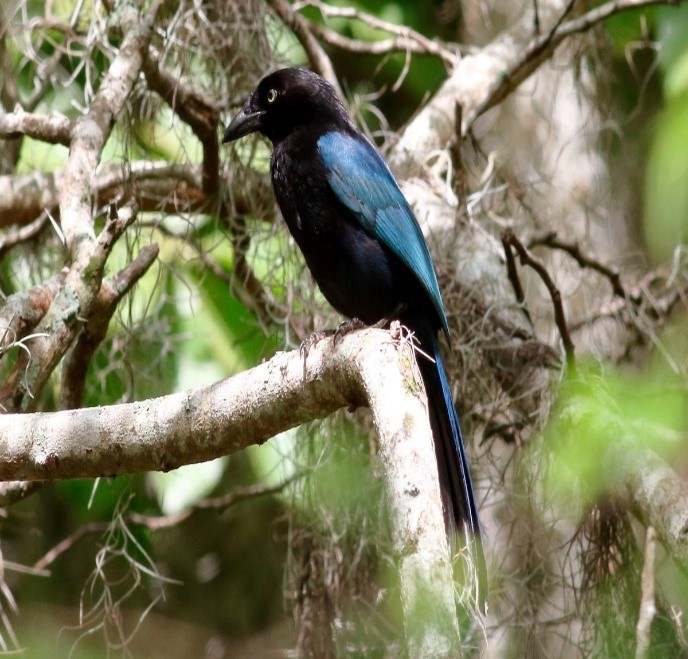
Name: BUSHY CRESTED JAY (R)
Scientific name: Cyanocorax melanocyaneus
Name in Spanish: Shara Centro Americana
Description:
The Bushy-crested Jay is one of four species of black-and-blue jays found in Central America. It is the only one of these four species with black tarsi and bluish underparts. This species lives in Guatemala, El Salvador, Honduras, and northern Nicaragua, a distribution which does not overlap with that of any of the other blue-and-black jays. This adaptable jay lives in many kinds of forests and disturbed habitats, such as coffee plantations. Bushy-crested Jays lives in family groups up to 15-20 individuals and eat insects, seeds, and fruit. The entire flock helps to rear three to six eggs in a twig nest. *
*Molfetto, D. (2010). Bushy-crested Jay (Cyanocorax melanocyaneus), version 1.0. In Neotropical Birds Online (T. S. Schulenberg, Editor). Cornell Lab of Ornithology, Ithaca, NY, USA. https://doi.org/10.2173/nb.bucjay1.01
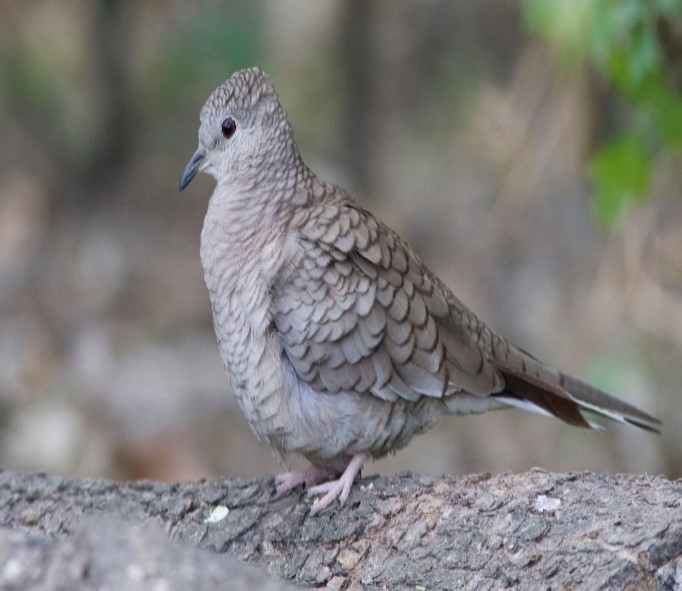
Name: INCA DOVE (R)
Scientific name: Columbina Inca
Name in Spanish: Tortolita
Description:
A small dove of Mexico, northern Central America, and the southwestern United States, the Inca Dove has extended its range both north and south over the past 100 years. A conspicuous urban resident, it commonly occurs at bird feeders and on lawns and other short grass habitats. This species was originally confined to arid habitats, and its affinity to human dwellings was attributed to the easy availability of water. It continues to spread into wetter areas, retaining its attachment to towns and cities for no obvious reason. *
* Inca Dove (Columbina inca), In Neotropical Birds Online (T. S. Schulenberg, Editor). Cornell Lab of Ornithology, Ithaca, NY, USA. retrieved from Neotropical Birds Online: https://neotropical.birds.cornell.edu/Species-Account/nb/species/incdov
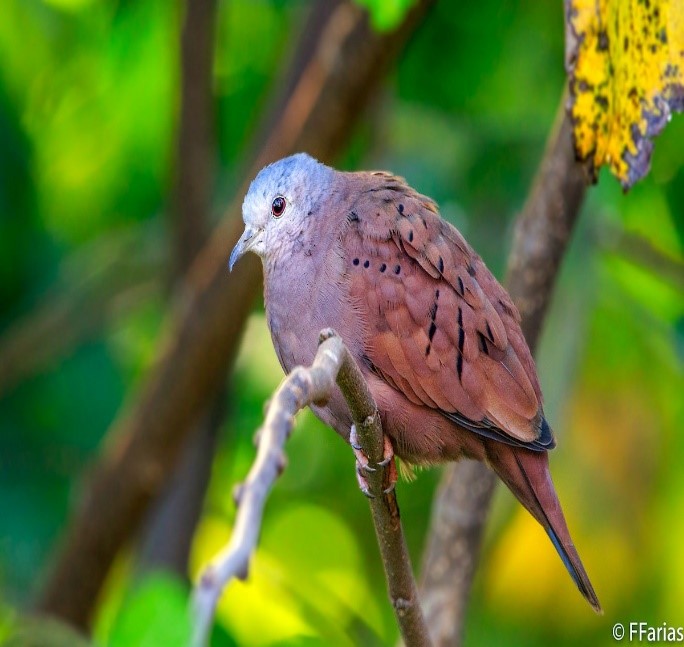
Name: RUDDY GROUND-DOVE (R)
Scientific name. Columbina Talpacoti
Name in Spanish: Columbina colorada
Description:
Ruddy Ground-Doves are appropriately named after the bright ruddy-colored plumage of the male, which makes them distinctive from males of other ground-doves. There are four subspecies ranging from northern Mexico south to eastern Peru and northern Argentina. Some geographic variation in plumage occurs with individuals in drier western areas being paler than those in wetter eastern areas. Given their flexibility in habitat use and rapid reproduction, Ruddy Ground-Doves are common throughout their range and are in the lowest threat category recognized by Bird Life International. *
*Hart, J. A. (2011). Ruddy Ground-Dove (Columbina talpacoti), version 1.0. In Neotropical Birds Online (T. S. Schulenberg, Editor). Cornell Lab of Ornithology, Ithaca, NY, USA. https://doi.org/10.2173/nb.rugdov.01
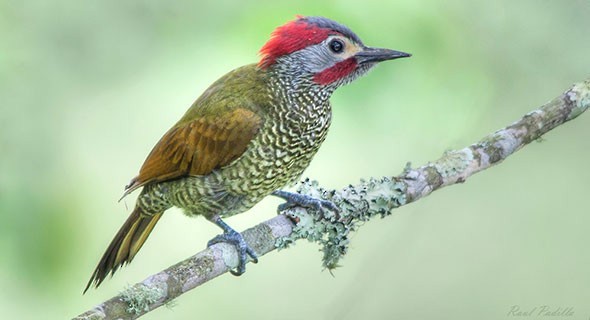
Name: GOLDEN-OLIVE WOODPECKER (R)
Scientific Name: Colaptes rubiginosus
Name in Spanish: Pájaro carpintero dorado
Description:
The Golden-olive Woodpecker is one of the most geographically widespread woodpeckers of the Neotropical region. It ranges through a wide variety of wooded habitats and over much of Middle America, from eastern Mexico just south of the US border to western Panama, and over much of highland northern and western South America. Given this broad range, it is perhaps unsurprising that some authors recognize up to 19 different subspecies. *
*Golden-olive Woodpecker (Colaptes rubiginosus), In Neotropical Birds Online (T. S. Schulenberg, Editor). Cornell Lab of Ornithology, Ithaca, NY, USA. retrieved from Neotropical Birds Online: https://neotropical.birds.cornell.edu/Species-Account/nb/species/goowoo1
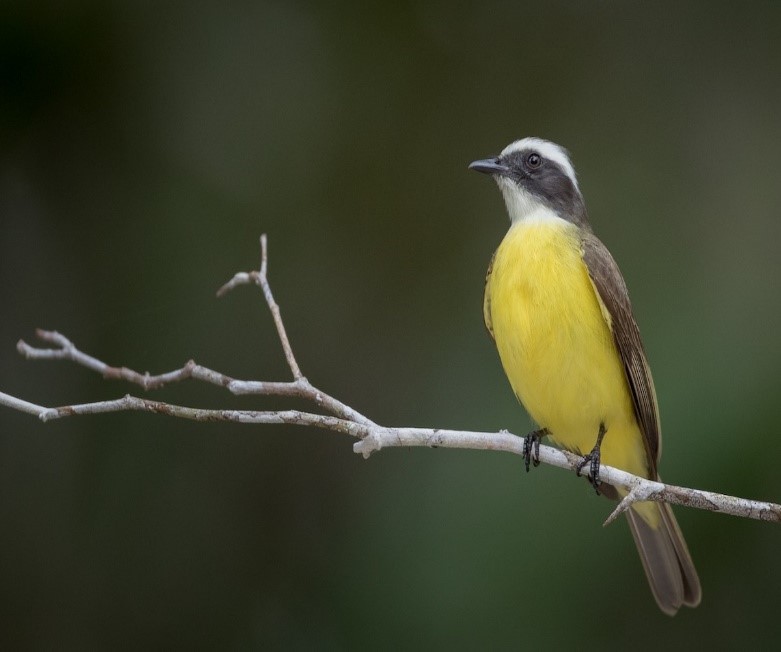
Name: SOCIAL FLYCATCHER (R)
Scientific name: Myiozetetes similis
Name in Spanish: Mosquero social
Description:
Social Flycatcher is a widespread and familiar member of the avifauna throughout much of the Neotropics. It can be quite common near water in forest and edge habitats ranging from northern Argentina north to Mexico. Like other stocky yellow, black and white flycatchers, Social Flycatcher is medium sized with brown upperparts and tail, a short, decurved bill, bold black and white striped head, and yellow underparts that run from the white throat to the undertail coverts. The species is easily detected, sits out in the open and gives loud, harsh and sometimes chattering calls. *
*Social Flycatcher (Myiozetetes similis), In Neotropical Birds Online (T. S. Schulenberg, Editor). Cornell Lab of Ornithology, Ithaca, NY, USA. retrieved from Neotropical Birds Online: https://neotropical.birds.cornell.edu/Species-Account/nb/species/socfly1
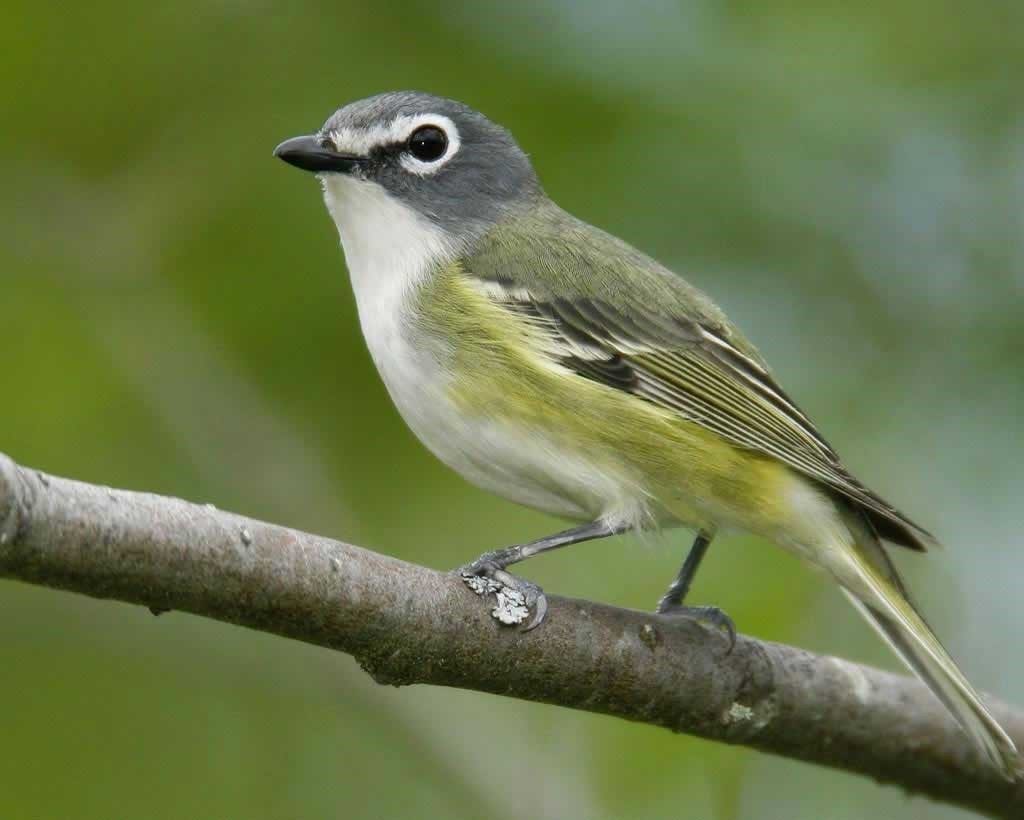
Name: BLUE HEADED VIREO (M)
Scientific name: Vireo solitarius
Name in Spanish: Vireo solitario
Description
This vireo is common in summer in mixed forest, where conifers and deciduous trees grow together. When feeding, it works rather deliberately along branches, searching for insects. Its nest, a bulky cup suspended in the fork of a twig, is often easy to find. This bird was formerly lumped with the western Plumbeous and Cassin’s vireos under the name Solitary Vireo.
Source: https://www.audubon.org/field-guide/bird/blueheaded-vireo
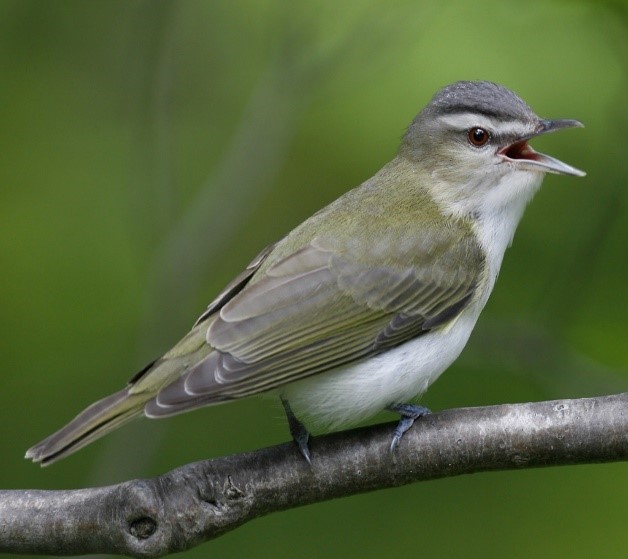
Photo By National Audubon Society www.audubon.org
Name: RED-EYED VIREO (M)
Scientific name: Vireo Olivaceus
Name in Spanish: Vireo de ojos rojos
Description:
One of the most numerous summer birds in eastern woods. It is not the most often seen, because it tends to stay out of sight in the leafy treetops, searching methodically among the foliage for insects.
Migrates mostly at night. Peak migration periods in most areas are May and September. Those breeding in Northwest apparently move east in fall before turning south. *
Source: https://www.audubon.org/field-guide/bird/red-eyed-vireo
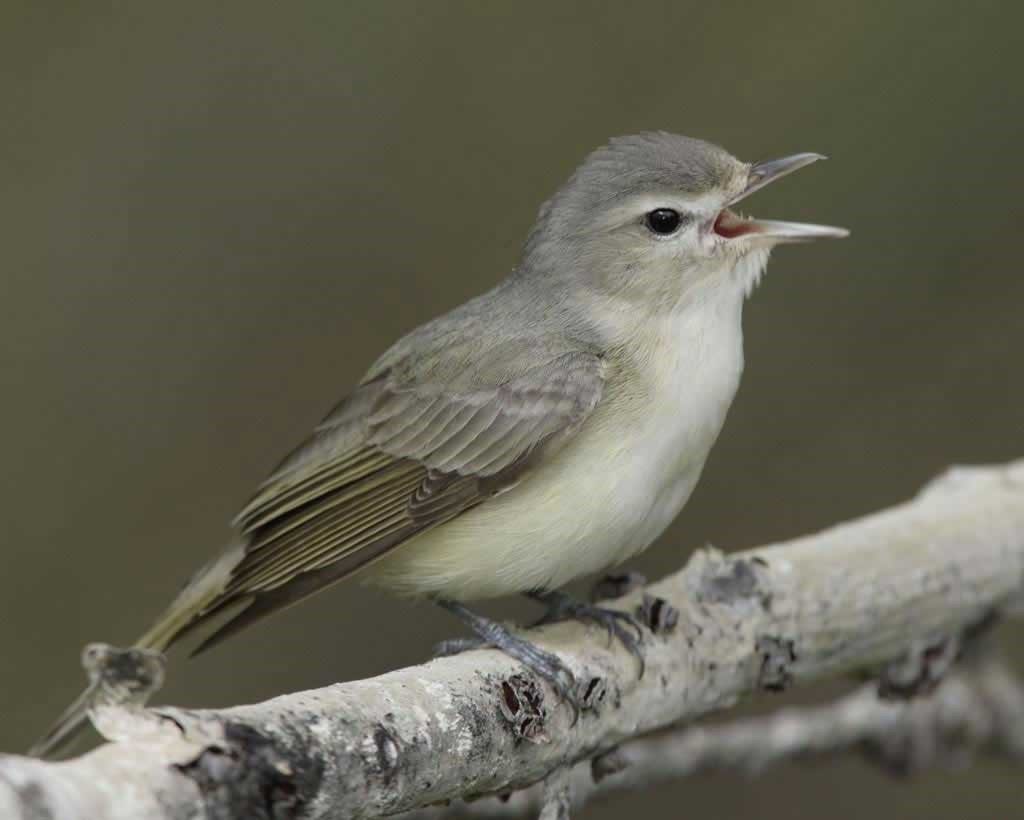
Name: WARLBING VIREO (M)
Scientific name: Vireo Gilvus
Name in Spanish: Chipe vireo o gorgoreador
Description:
The Warbling Vireo is a common summer bird in leafy groves and open woods from coast to coast. Because it avoids solid tracts of mature, unbroken forest, it is probably more common and widespread today than it was when the Pilgrims landed.
Migrates mostly at night. Most eastern breeders apparently travel north and south via Texas and Mexico, rather than flying across Gulf of Mexico. *
*Source: https://www.audubon.org/field-guide/bird/warbling-vireo
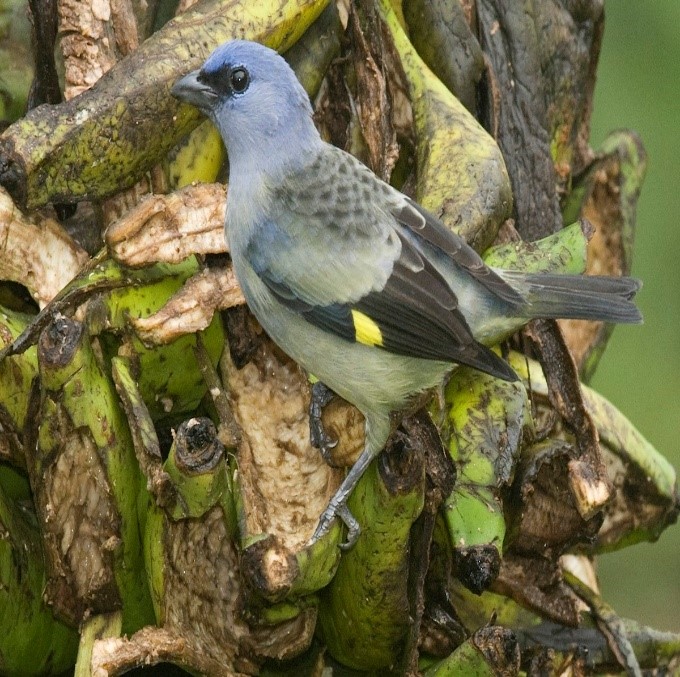
Name: YELLOW-WINGED TANAGER (M)
Scientific name: Thraupis abbas
Name in Spanish: Tángara aliamarilla
Description:
This species and the Blue-gray Tanager (Thraupis episcopus) are the northernmost representatives of the genus Thraupis; both reach well into northeast Mexico, but whereas the Blue-gray Tanager is also widespread in South America, Yellow-winged Tanager reaches its southern terminus in Nicaragua, although there are recent records from northernmost Costa Rica. The species is easily identified by its largely bluish to dusky plumage, relieved principally by the bright yellow blaze at the base of the remiges. Like other Thraupis species, it is usually found at edges and in semi-open areas, and it is rather sociable, being occasionally reported in flocks numbering up to 50 or more individuals. It ranges to at least 1800 m on the Atlantic slope. *
*Yellow-winged Tanager (Thraupis abbas), In Neotropical Birds Online (T. S. Schulenberg, Editor). Cornell Lab of Ornithology, Ithaca, NY, USA. retrieved from Neotropical Birds Online: https://neotropical.birds.cornell.edu/Species-Account/nb/species/yewtan1
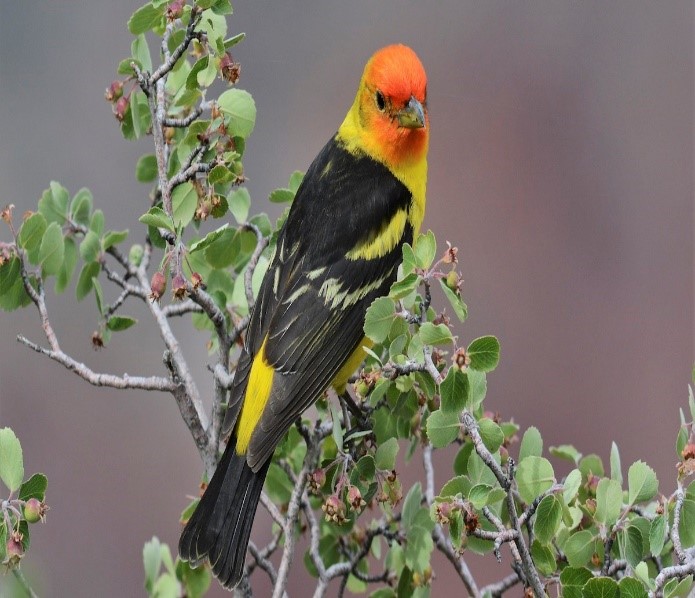
Name: WESTERN TANAGER (M)
Scientific name: Piranga Ludoviciana
Name in Spanish: Tángara aliblanca
A western counterpart to the Scarlet Tanager, this species occurs in summer farther north than any other tanager — far up into northwestern Canada. Western Tanagers nest in coniferous forests of the north and the high mountains, but during migration they may show up in any habitat, including grassland and desert; the bright males often draw attention by pausing in suburban yards in late spring.
Migration: Protracted migration lasts late in spring and begins early in fall, with some birds seen away from breeding areas as late as mid-June and as early as mid-July*
Source: https://www.audubon.org/field-guide/bird/western-tanager
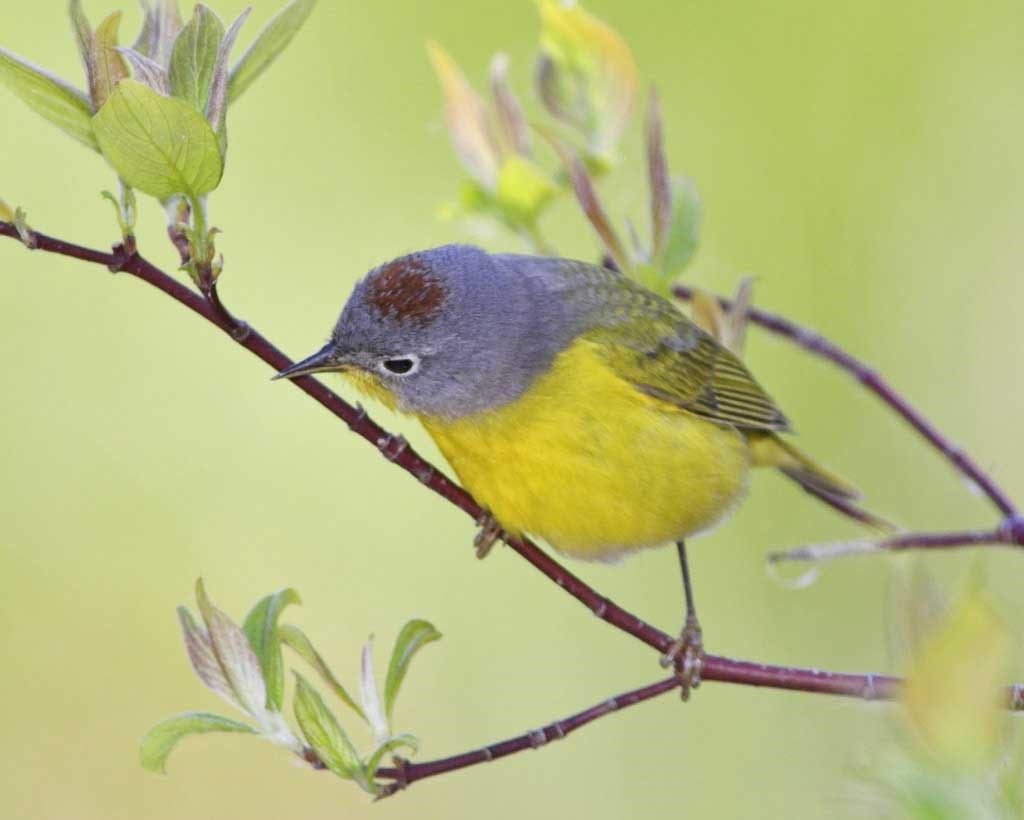
Name: NASVILLE WARBLER (M)
Scientific name: Oreothlypis ruficapilla
Name in Spanish: Reinita o chipe de cabeza gris
Description:
Pioneer birdman Alexander Wilson encountered this bird first near Nashville, Tennessee, and it has been called Nashville Warbler ever since — even though Wilson’s birds were just passing through in migration, and the species does not nest anywhere near Tennessee. This small warbler is common in both the east and the west, often seen foraging in thickets and young trees, flicking its short tail frequently as it seeks insects among the foliage.
Migration
Birds from both eastern and western breeding populations winter mainly in Mexico. Unlike many warblers, does not migrate north across Gulf of Mexico in spring; instead, travels around Gulf, then spreads northeastward to easternmost breeding areas.
Source: https://www.audubon.org/field-guide/bird/nashville-warbler
Name: RUFOUS SABREWING (R)
Scientific name; Campylotepterys Rufus
Name in Spanish: Fandanguero rufo
Rufous Sabrewing is restricted to the highlands of northern Central America where it is most abundant above 1300 meters. It frequents the interior and edge of rainforests, and is also found in plantations, partially wooded canyons, and humid pine-oak forests. These hummingbirds are most active at lower levels, especially in the dense understory and in partially open areas. Both sexes are similar and possess cinnamon colored underparts
*Arizmendi, M. d. C., C. I. Rodríguez-Flores, C. A. Soberanes-González, and T. S. Schulenberg (2013). Rufous Sabrewing (Campylopterus rufus), version 1.0. In Neotropical Birds Online (T. S. Schulenberg, Editor). Cornell Lab of Ornithology, Ithaca, NY, USA. https://doi.org/10.2173/nb.rufsab1.01
© John van Dort Macaulay Library ML30768081
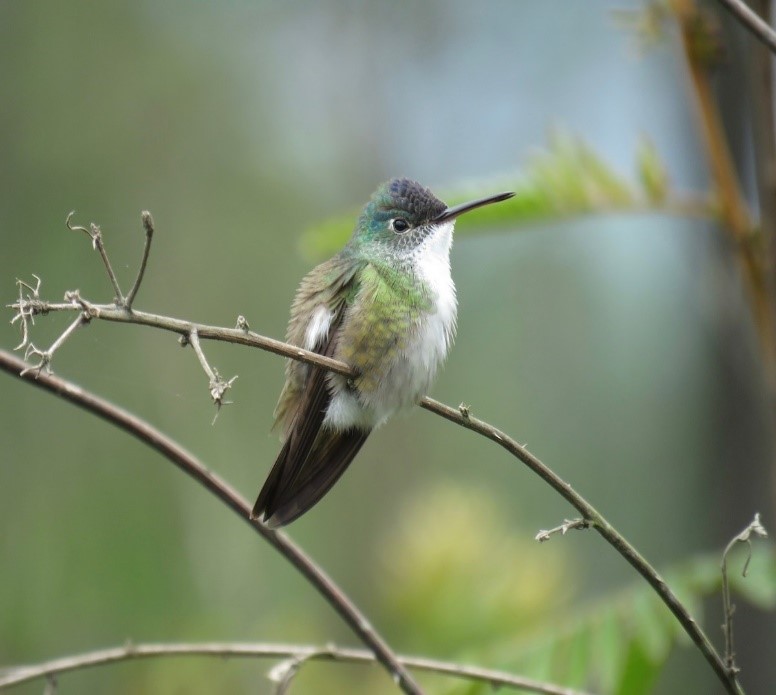
Name: AZURE-CROWNED HUMMINGBIRD (R)
Scientific name: Amazilia Cyanocephala
Name in Spanish: Colibri coroniazul
Description:
Azure-crowned Hummingbird is a common species throughout many forested habitats from Mexico south to Nicaragua. Even though this hummingbird occupies a wide variety of habitats, in both pine and broadleaf forests from sea level up into the mountains, specific factors limiting the range of the species have not been satisfactorily identified.; generally, this species is blue crowned with a greenish iridescent hindneck, white throat, brownish back and wings, and a thin, red bill with a dark tip. Azure-crowned Hummingbird usually announces its presence with a series of sharp “chup” notes*
*Arizmendi, M. d. C., C. I. Rodríguez-Flores, C. A. Soberanes-González, T. Johnson, and T. S. Schulenberg (2013). Azure-crowned Hummingbird (Amazilia cyanocephala), version 1.0. In Neotropical Birds Online (T. S. Schulenberg, Editor). Cornell Lab of Ornithology, Ithaca, NY, USA. https://doi.org/10.2173/nb.azchum1.01
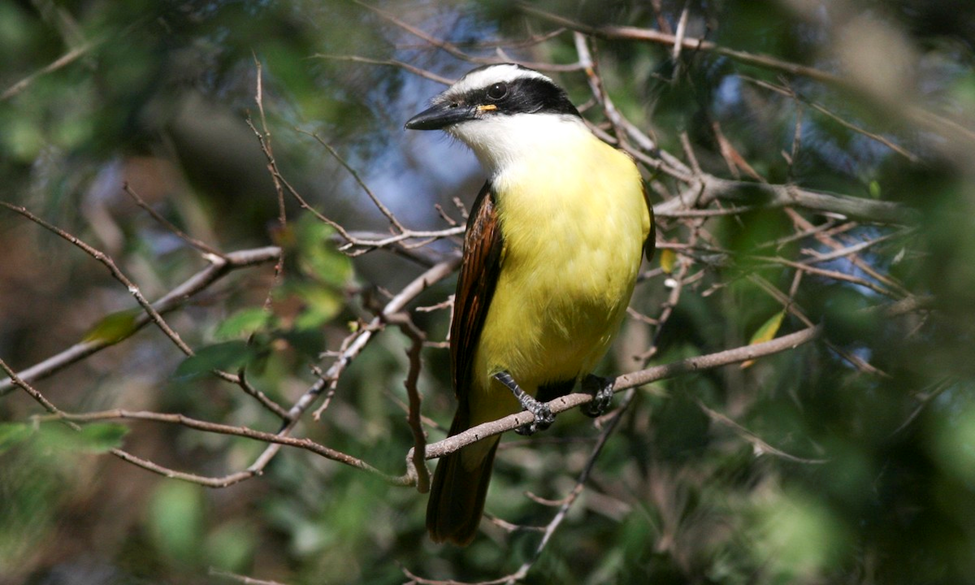
Name: THE GREAT KISKADEE (R)
Scientific name: Pitangus sulpuratus
Name in Spanish: Luis grande
Description:
The Great Kiskadee is a large and strikingly colored flycatcher that inhabits much of Central and South America. It has a black crown with a yellow coronal patch and a broad white supercilium that extends from its forehead to its nape. The kiskadee’s olive-brown wings are set off by cinnamon wing coverts and bright yellow underparts. Great Kiskadees reside in a variety of habitats from forest edges to grasslands to busy residential areas. These birds can often be seen hawking insects from an open perch or dropping to the ground feeding on insects and small reptiles.
*Great Kiskadee (Pitangus sulphuratus), In Neotropical Birds Online (T. S. Schulenberg, Editor). Cornell Lab of Ornithology, Ithaca, NY, USA. retrieved from Neotropical Birds Online: https://neotropical.birds.cornell.edu/Species-Account/nb/species/grekis
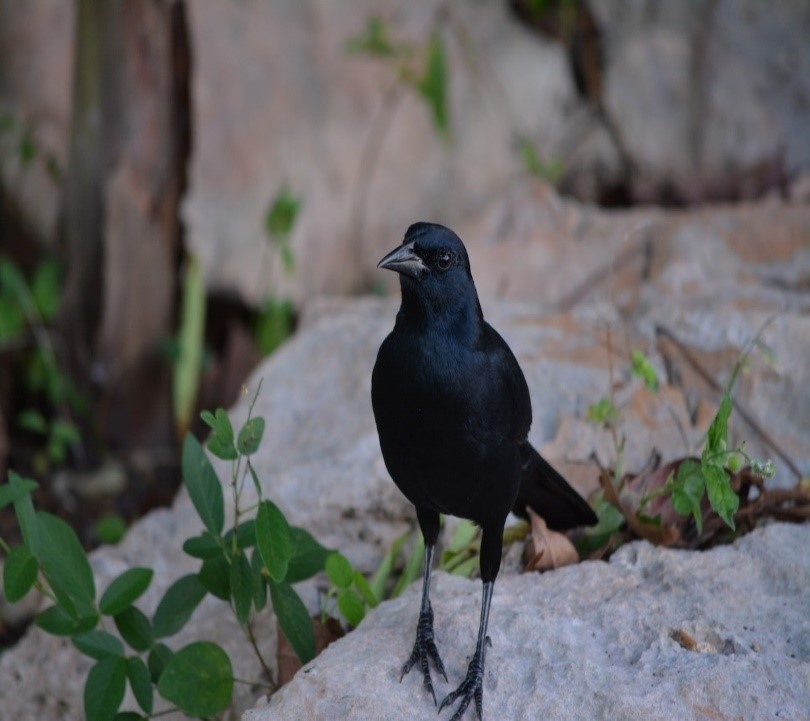
Name: MELODIOUS BLACK BIRD (R)
Scientific name: Dives Dives
Name in Spanish: Zanate Cantor
Description:
The Melodious Blackbird is a rather unique and vociferous all black icterid of Mexico and Central America. It has a relatively thick and long bill, but most noticeable is that the legs and feet look a size too big on this mid-sized blackbird. Pairs appear to be year-round territorial and they likely keep their pair bond for multiple seasons. Melodious Blackbirds pairs perform a unique duetting display where they sing to each other while bobbing up and down as if doing push-ups. The most distinct and easy to recognize note in their song display is a loud “Whit –Tcheeewwww!” that reminds one of a call of a Northern Cardinal (Cardinalis cardinalis), although much louder and more emphatic.
Melodious Blackbird (Dives dives), In Neotropical Birds Online (T. S. Schulenberg, Editor). Cornell Lab of Ornithology, Ithaca, NY, USA. retrieved from Neotropical Birds Online: https://neotropical.birds.cornell.edu/Species-Account/nb/species/melbla1
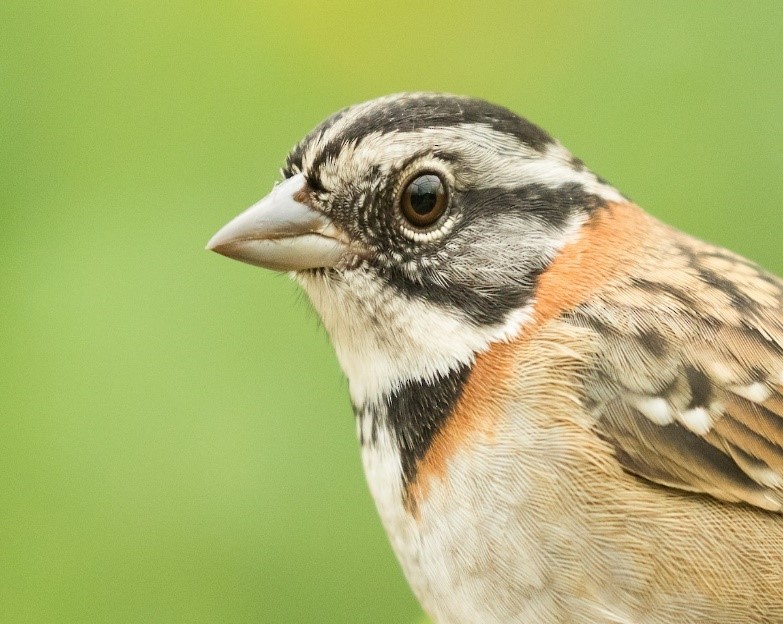
Name: RUFOUS-COLLARED SPARROW (R)
Scientific name: Zonotrichia Capensis
Name in Spanish: Coronadito,
The Rufous-collard Sparrow is a ubiquitous resident of lowland and montane scrub from Mexico south to Tierra del Fuego. Rufous-collared Sparrows have a gray head with two broad black crown stripes and a blackish line through the eye, prominent rufous collar, rufescent upperparts streaked black and white underparts with black patches on either side of the chest. The sparrows are very tolerant to human presence and are a common sight in settlements across South America. Rufous-collard Sparrows are often encountered hopping on open ground as they forage for seeds and insects or singing from a prominent perch on a shrub or rock*
*Rufous-collared Sparrow (Zonotrichia capensis), In Neotropical Birds Online (T. S. Schulenberg, Editor). Cornell Lab of Ornithology, Ithaca, NY, USA. retrieved from Neotropical Birds Online: https://neotropical.birds.cornell.edu/Species-Account/nb/species/rucspa1
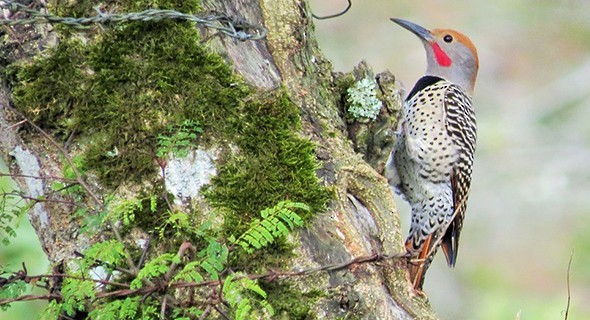
Name: NORTHERN FLICKER (R)
Scientific name. Colaptes auratus
Name in Spanish: Carpintero escapulario
Description:
The Northern Flicker is a common, primarily ground-foraging woodpecker that occurs in most wooded regions of North America. Its taxonomic status has been debated because of hybridization among subspecies groups, each readily distinguished by plumage coloration. Two other subspecies of the Northern Flicker are allopatric; the Cuban Flicker (C. a. chrysocaulosus) occurs on Cuba and Grand Cayman Island, and the Guatemalan Flicker (C. a. mexicanoides) occurs in the highlands of southern Mexico south to northwestern Nicaragua.
Northern Flicker (Colaptes auratus), In Neotropical Birds Online (T. S. Schulenberg, Editor). Cornell Lab of Ornithology, Ithaca, NY, USA. retrieved from Neotropical Birds Online: https://neotropical.birds.cornell.edu/Species-Account/nb/species/norfli
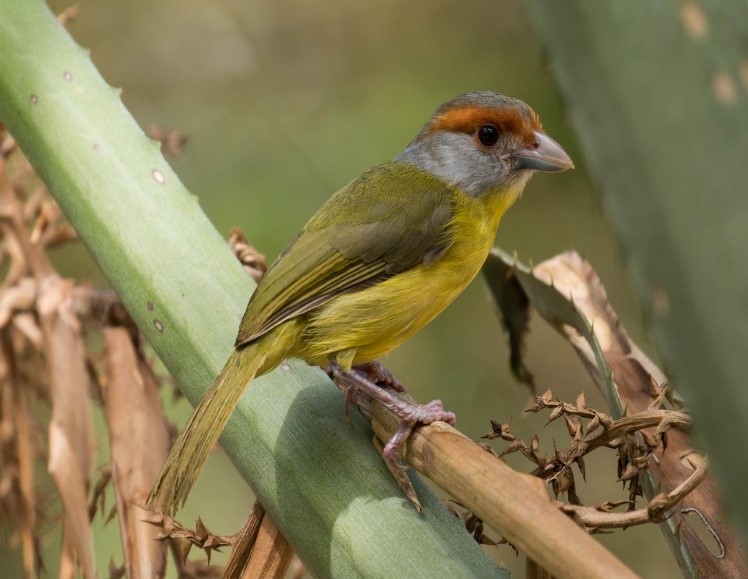
Name: RUFOUS-BROWED PEPPERSHRIKE (R)
Scientific name: Cyclarhis gujanensis
Name in Spanish: Vireo cejirrufo
Description:
The Rufous-browed Peppershrike is one of the largest species of the vireo. It inhabits a wide range of open and semi-open habitats throughout tropical and subtropical Central and South America.
The song is equally as variable but is generally a series of rich musical phrases that is repeated seemingly without end.
Rufous-browed Peppershrike (Cyclarhis gujanensis), In Neotropical Birds Online (T. S. Schulenberg, Editor). Cornell Lab of Ornithology, Ithaca, NY, USA. retrieved from Neotropical Birds Online: https://neotropical.birds.cornell.edu/Species-Account/nb/species/rubpep1
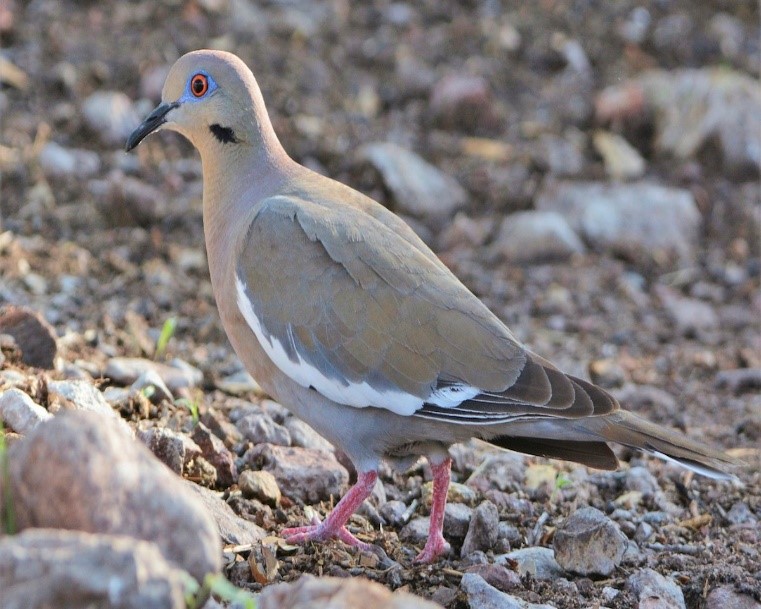
Name: WHITE-WINGED DOVE (R)
Scientific name: Zenaida asiatica
Name in Spanish: Paloma aliblanca
Description:
This large, semitropical dove ranges from the southernmost U.S. and Mexico (where it is partially migratory) south through Central America and much of the West Indies. The majority of White-winged Doves are seasonally migratory. They overwinter in Mexico and Central America and come to the southwestern United States and northern Mexico in April to breed, departing again in September. *
*White-winged Dove (Zenaida asiatica), In Neotropical Birds Online (T. S. Schulenberg, Editor). Cornell Lab of Ornithology, Ithaca, NY, USA. retrieved from Neotropical Birds Online: https://neotropical.birds.cornell.edu/Species-Account/nb/species/whwdov
Name: BLACK-VENTED ORIOLE (R)
Scientific name: Icterus wagleri
Name in Spanish: Bolsero de Wagler
Description:
The Black-vented Oriole is widespread in Middle America, between western and central Mexico south to Nicaragua; it inhabits open woodland and scrubby areas, from sea level to 2500 m at least. This species is typically found in pairs, which remain together year-round, and sometimes in small groups, but it is rarely conspicuous*.
*Black-vented Oriole (Icterus wagleri), In Neotropical Birds Online (T. S. Schulenberg, Editor). Cornell Lab of Ornithology, Ithaca, NY, USA. retrieved from Neotropical Birds Online: https://neotropical.birds.cornell.edu/Species-Account/nb/species/bkvori
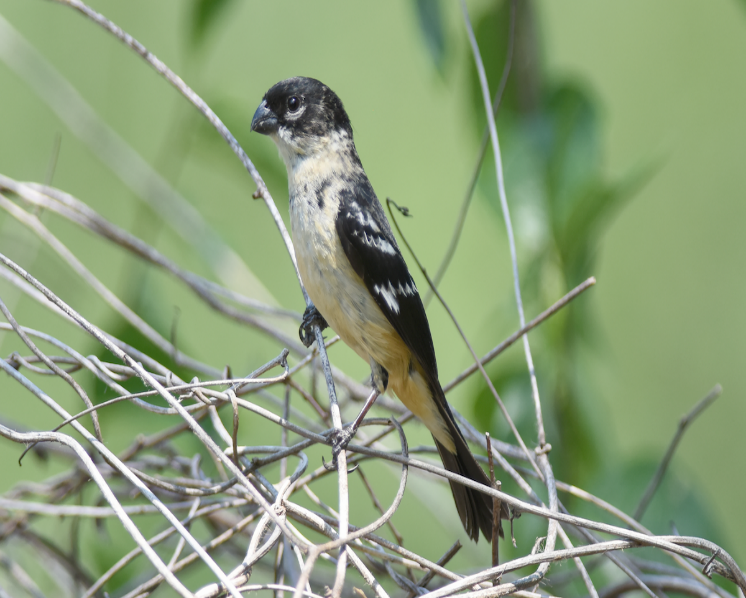
Name: MORELET´S CINNAMON-RUMPED SEEDEATER (R)
Scientific name: Sporophila moreletti/torqueola
Name in Spanish: Semillero collarejo
Description:
The White-collared Seedeater is identifiable by the broad white collar, white rump, and black hood. The species occurs from southern Texas south to the western Panama and is the only member of the widespread genus Sporophila that is confined solely to Mexico and Central America. There are four subspecies of White-collared Seedeater, and the species is split into two species by some authorities. *
*Adel, F., K. J. Burns, J. C. Eitniear, and T. S. Schulenberg (2010). Morelet’s/Cinnamon-rumped Seedeater (Sporophila morelleti/torqueola), version 1.0. In Neotropical Birds Online (T. S. Schulenberg, Editor). Cornell Lab of Ornithology, Ithaca, NY, USA. https://doi.org/10.2173/nb.whcsee.01
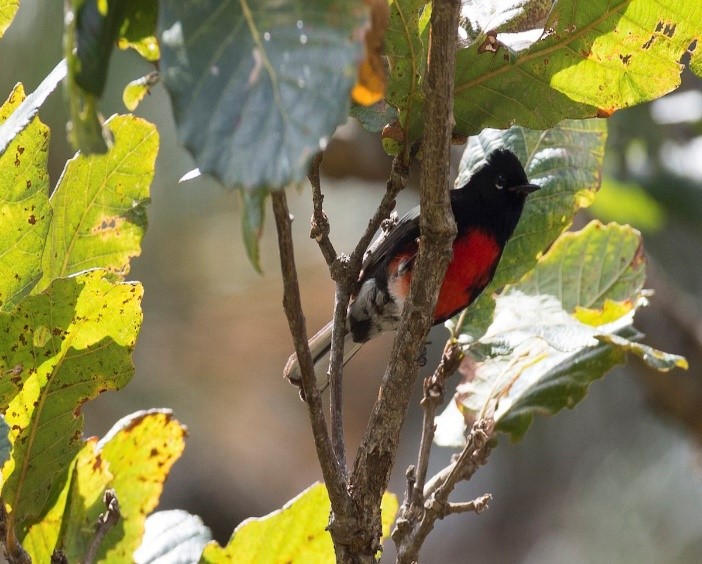
Name: PAINTED REDSTART (R)
Scientific name: Myoborus pictus
Name in Spanish: Pavito aliblanco
Description:
The Painted Redstart is among the most attractive and festive looking of all Parulids. It is largely black, but shows a large white wing patch, extensive white on the outside of the tail, a bright red belly and a surprisingly noticeable white crescent below the eye. It is a bird of Pine-Oak forests found as far north as the Southwest of the United States, south to northernmost Nicaragua. *
*Painted Redstart (Myioborus pictus), In Neotropical Birds Online (T. S. Schulenberg, Editor). Cornell Lab of Ornithology, Ithaca, NY, USA. retrieved from Neotropical Birds Online: https://neotropical.birds.cornell.edu/Species-Account/nb/species/paired
Name: BLUE-AND-WHITE-MOCKINGBIRD (R)
Scientific name: Melanotis hypoleucus
Name in Spanish: Censontle pechiblanco
Description:
A highly distinctive bird within its relatively small range, the strikingly long-tailed Blue-and-white Mockingbird is just that. The entire upperparts are deep blue, except for the black mask, while below the bird is all white, except for the blue gray flanks and vent. *
*Soberanes-González, C. A., C. I. Rodríguez-Flores, M. d. C. Arizmendi, G. M. Kirwan, and T. S. Schulenberg (2013). Blue-and-white Mockingbird (Melanotis hypoleucus), version 1.0. In Neotropical Birds Online (T. S. Schulenberg, Editor). Cornell Lab of Ornithology, Ithaca, NY, USA. https://doi.org/10.2173/nb.bawmoc1.01
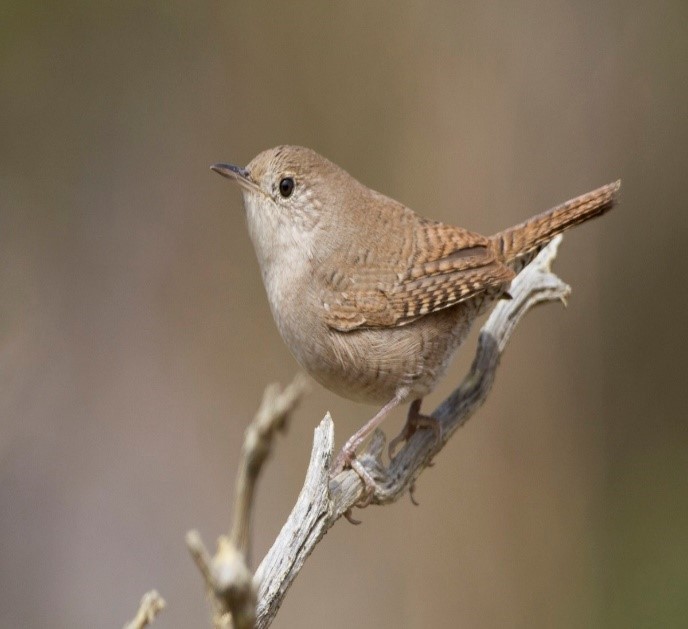
Name: HOUSE WREN (R)
Scientific name: Troglodytes aedon
Name in Spanish: Saltapared sureño
Description:
Looking at the distribution of the House Wren it is easily one of the most widely distributed of all New World songbirds. However, the truth is certainly much more complex. In the past this species has been separated into three groups, with the Isthmus of Tehuantepec in Mexico being a division line between two of these, the southern and northern House Wrens. There has not been a modern genetic study of this species, but surely the reality of how many species level units are in the House Wren complex will be much more complicated. *
*House Wren (Troglodytes aedon), In Neotropical Birds Online (T. S. Schulenberg, Editor). Cornell Lab of Ornithology, Ithaca, NY, USA. retrieved from Neotropical Birds Online: https://neotropical.birds.cornell.edu/Species-Account/nb/species/houwre
Classification:
M= Migrant Birds
R= Resident birds
T= Birds in transit
E= Introduced from Europe
Useful links:
https://www.audubon.org/bird-guide
https://neotropical.birds.cornell.edu/Species-Account/nb/home
http://www.birdwatching.com.gt
25 Stunning And Beautiful Birds You Should Know About!

The Guatemalan Piñatas
The Guatemalan Piñatas
Written by Lorena Bleker
Revised by Vickie Sutton
You may or may not have seen them, but in Guatemala piñatas are a strong tradition; a must have for every birthday party, especially for children. Piñatas are among the most important part of the celebration.
If you host a “piñata” you better stuff it with candies, lollipops, chocolates, plastic toys, and you can add money if you like! Otherwise you will be highly unpopular with the children and their parents.
For a birthday party, all the participants wait for their turn to hit the piñata with a wooden stick. The first shot is for the birthday boy or girl. Their eyes are covered, with the idea of making it difficult to break the piñata so that the rest of the kids have a chance to hit it. After the poor piñata is crushed, all the candies and lollipops fall on the floor and children jump to collect them. It is funny and crazy when mothers help their children to collect the candies! They also lay on the floor! Prepare your camera, it is freaking hilarious!
How it all started?
The Merchant, Marco Polo, traveled from Italy to China, where he witnessed a very special celebration during the Chinese New Year. The population used to break a clay pot covered with paper in many colors, as part of the festivities!
Marco Polo liked it so much, that he imported this tradition to Italy. The Italians called it “pignatta”, which means “pot”. Of course, they changed the date and meaning, and they started to break the pignatta during the Roman Catholic Easter holiday that is a period of fasting and prayer, called Lent (Cuaresma). This is a solemn religious observance in the Christian liturgical calendar begins on Ash Wednesday and ends before Easter Sunday or the last day of the Holy Week. The Catholics in Italy used to break the piñata during this period as a symbol of breaking from sin. In Guatemala we don’t break piñatas during the Lent.
How they ended up in America?
The pignatta traveled to Spain as part of the Catholic tradition during Easter. Spanish priests that came with the conquerors, brought this tradition to the Americas. But instead, they made the piñata clay pot as a star with 7 sides, replacing it as a symbol of the 7 capital sins. It is at this time that they started to stuff the clay pot with sweets. The spiritual connotation was that when we break from the 7 sins, gifts are falling from heaven.
Piñatas were made of clay and they are still made in Mexico in the same way. In Mexico, they also use the star piñata during the “Posadas”, celebrated before Christmas. Posada is a Pilgrimage procession of Joseph and Mary looking for a shelter, going every night from home to home hoping to find a place to rest and wait for the birth of Jesus, the Son of God. Every house hosting Joseph and Mary organize a prayer ritual, sing Christmas songs with the guests, and prepare snacks for the participants of the procession. The last posada happens one night before the Christmas celebration.
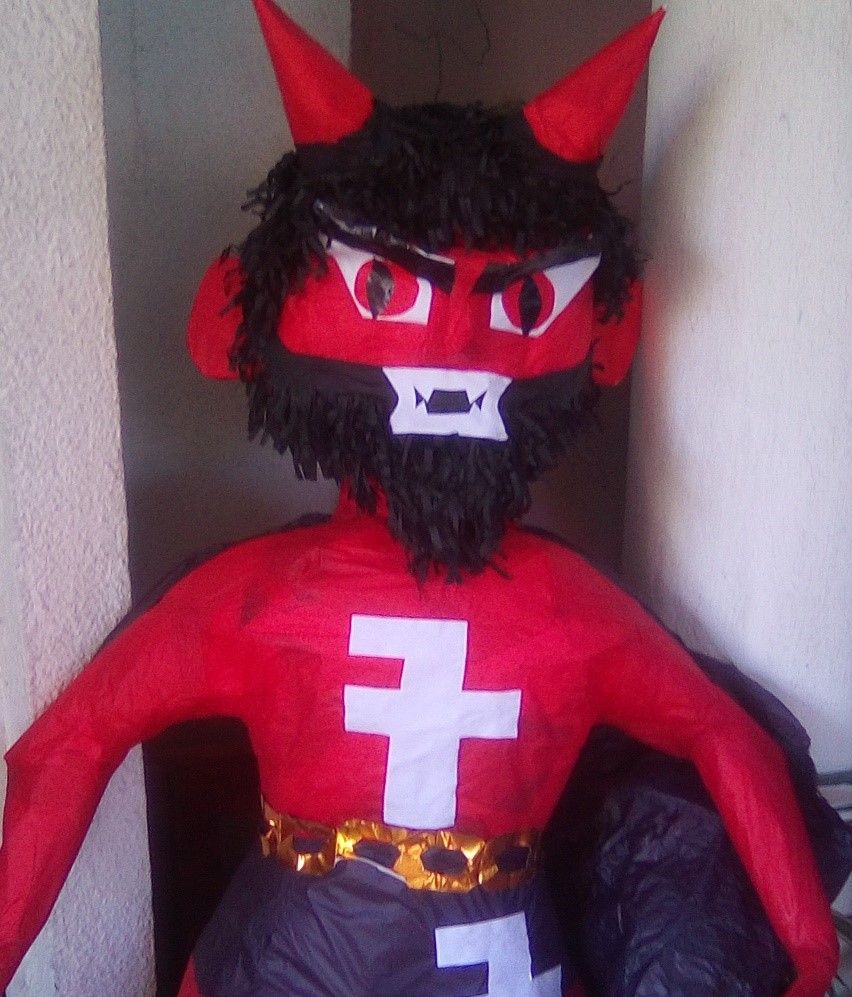
In Guatemala, we have the same “Posada” tradition around Christmas Celebrations, but without a piñata. However, we do use a piñata with the form of the devil during the 7th of December celebration called “Burn the Devil Day”. Oh yes, we burn the piñata, but we stuff it with fireworks instead of candies! This tradition of burning the devil comes from the colonial times but we started using a devil piñata at from early 90´s. Before we used to collect dry wood and leaves called “Chiribisco”, to burn it.
Every 7th of December, at 6pm It is a preparation to clean the houses from bad elements and burn them in fire, in order to be spiritually ready before the “Immaculate Conception” day on the 8th of December. The best place to enjoy the festivities around those days is in Ciudad Vieja, near Antigua, Guatemala. Antigua, Guatemala, is also famous for burning a giant devil piñata. The locals and tourists also go around the fire at 6 pm. On the Burn the devil day, is when Christmas festivities begin in our country.
The revolution of the piñatas
During the 70’s, the way of making pinatas in our country, has changed. Now they are made without a clay pot, but by shaping wires and covering them with colorful paper. They are mainly copying cartoon characters from popular TV shows or movies, and crazy politicians! People use customized piñatas also as a form of protest in demonstrations. For example, if you want to protest corruption, you make a piñata in the form of a rat!
If you wish to visit the place where these funny piñatas are made, the artisans are based around Parque Colon in zone 1, not too far away from Central Market.

Fiambre
All Saints’ Day and Day of the Dead Celebration
By Lorena Bleker
Reviewed by Dr. Cynthia Moore
A meal we eat during Día de los Muertos, (Day of the Dead), in Guatemala, has a lot of meaning in our culture. Called Fiambre, it creates a magical bond between the living and the ancestors. It is a sacred food that symbolizes this bond. Rituals and sacrifices honoring the dead, were popular in pre-Hispanic times, the symbolic meal offered to the deceased in Mesoamerica were celebrated in the month of July when the Mayan New Year began.
This commemoration was lost but it reappeared in the sixteenth century, already syncretized with the catholic traditions, when the Spanish arrived, back in the colonial Guatemala, they celebrated all Saint´s day with special meals cold meats and vegetables, that were cooked with culinary techniques that they inherited from the time of the Arab occupation of Spain.
With the process of mixing the indigenous culture with that of the Europeans and bringing together cultural and religious elements, the colonial Guatemalan population of the late sixteenth century, created that magical dish, The Fiambre. It is served cold and enjoyed on November 1 and 2 in celebration of the All Saints’ Day, together with the Day of the Dead, to close the cycle of festivities.
This dish is mentioned in conventual recipes of the early seventeenth century and in the chronicles of Tomas Gage between 1625 and 1638. The Fiambre meal is a symbolic and exquisite food for its baroque style and cooking methods. It expresses cultural heritage, the world view and the way of seeing the Guatemalan world made up of Spanish, Mestizo and Maya influences. It is truly a representative element of multi-culturalism in our country.
By preparing Fiambre, we are putting together the multi-ethnic identity of the Guatemalan: The use of local vegetables and seasoning that are Mayan, thus of pre-Hispanic heritage: the use of different types of meats and sausages of Spanish descent and the use of cheeses, capers, artichokes, olives and other spices from the Arab influence, and as a special touch, it hides the culinary secrets of the Guatemalan cooks (or Guatemalan kitchen)
This meal is prepared for the Day of the Dead, relatives together with the closest friends of the “finados”, (dead) are taking the fiambre, to the “Campo Santo” (Cemetery) and share between the them. It is tradition to spend the 1st. of November together in the cemetery and bring flowers, offerings and serenades to their death relatives and friends.

During the celebration, all cultural elements are mingled together, such as the use of water, fire and vegetables. According to pre-Hispanic beliefs, this mingling is expressed as water carried to the deceased, smoking tobacco and drinking alcohol in the “Campo Santo”, preparing meals and use all these elements as offering to the deceased, and presenting it on top of their graves. In some places the sky becomes filled with color as people fly giant kites as symbol of connection with the deceased, like the famous Sumpango Kites or Santiago Sacatepéquez kites,
Thus, Guatemalan Fiambre begins as an offering and sacrificial food as well as a means of communication with the ancestors. (for the Catholics, the Day of the Dead is a day of prayers, for those who are waiting in the purgatory for redemption)
The preparation of the Fiambre’s cold cuts is an activity that bring families together and this is how the tradition is passing from generation to generation, that occurs during preparation when cutting vegetables, sausages and other ingredients. Guatemala has different types of cold cuts according to the regions or culinary variants of the cooks.
The Fiambre is an ancestral heritage and not an improvisation of some nuns or cooks as was previously speculated. This dish is one of the most important meals the country has brought to the world, probably one of the most exquisite in Latin America for its unique form of creativity, demonstrated by the incorporation of products so different to the palate and of such diverse origins.
The Fiambre is a sort of salad, that has more than 50 ingredients, depending on the region where is prepared. It has a mix of vegetables, cold meats, artichokes, capers, pickles, cheese, etc. seasoned with vinegar, olive oil and fresh herbs like rosemary, thyme, oregano, etc,
Colorful, tasty, unique. Fiambre is the intangible patrimony of Guatemala. There is nowhere else in the world where you can taste this dish.
Useful Links

USEFUL LINKS
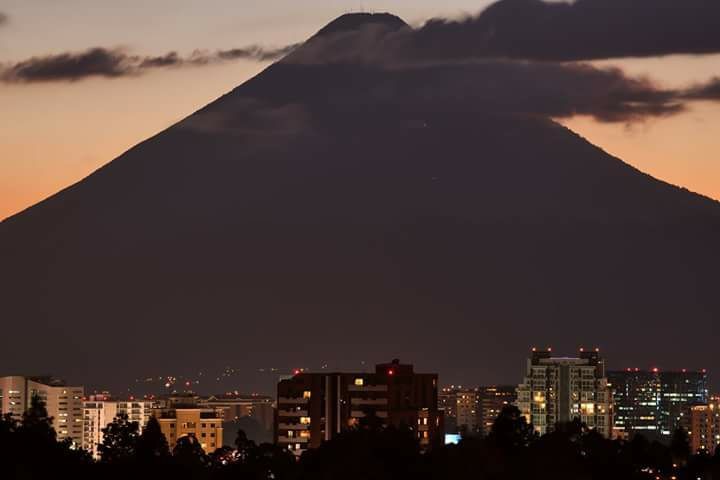
Photo: Guatemala impresionante
GUATEMALA CITY MAPS
(Free Guatemala city map available at Dos Lunas)
http://www.geovisitguatemala.com/
https://sig.muniguate.com/home/?mod=map_museos
https://sig.muniguate.com/proyectosDIGM/cultura/monumentos/
Historic route map
http://rutahistorica.muniguate.com/ruta_de_ilustracion/menu_principal.html
List of Guatemala City museums
https://sig.muniguate.com/home/?mod=dir_museos
MORE LINKS ABOUT GUATEMALA CITY
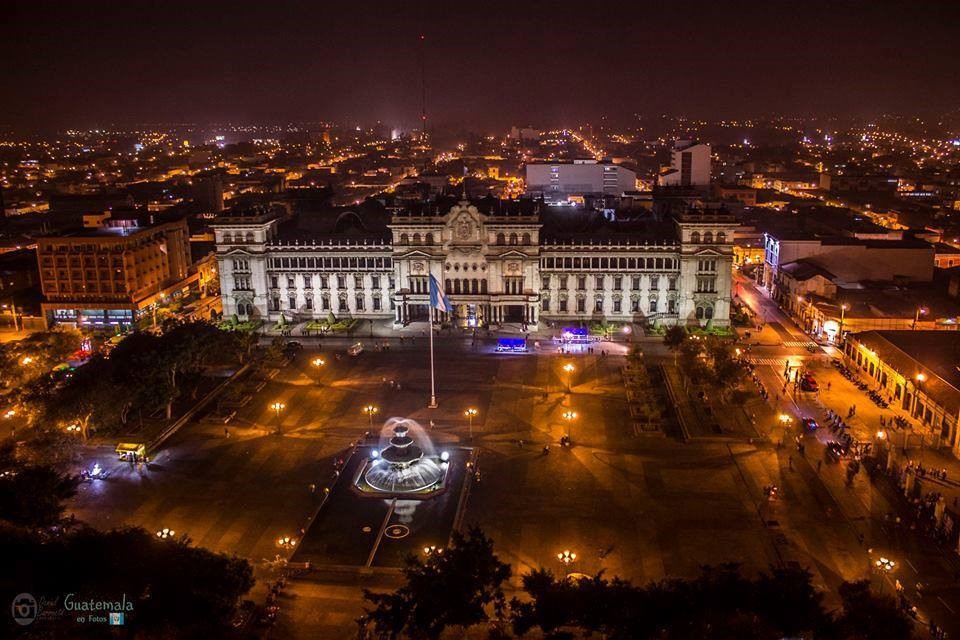
www. guatemala.com (spanish)
Guatemalan restaurant with live folkloric show
https://www.guatemalaespectacular.com/

AIRPORT LINKS
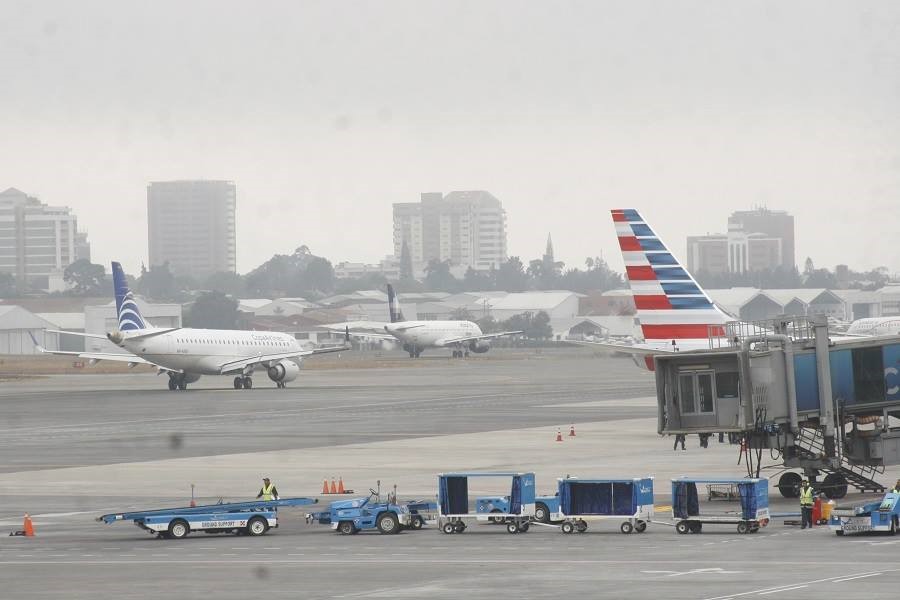
AIRLINES (Operating at La Aurora airport)
INTERNATIONAL AIRLINES:
- Aero México www.aeromexico.com
- American Airlines www.aa.com
- Avianca www.avianca.com
- Copa www.copaair.com
- Delta www.delta.com
- Iberia www.iberia.com
- Interjet www.interjet.com (low cost)
- Spirit www.spiritair.com (low cost)
- Volaris www.volaris.com (low cost)
- United www.united.com
Local airline
- TAG www.tag.com.gt
FLIGHT STATUS
www.flightradar24.com
www.flighstats.com
https://origin.flightaware.com/

EMBASSIES IN GUATEMALA
USA: https://gt.usembassy.gov/
CANADA: https://www.canadainternational.gc.ca/guatemala/index.aspx?lang=eng
GERMANY: https://guatemala.diplo.de/gt-de
ESPAÑA: http://www.exteriores.gob.es/Embajadas/GUATEMALA/es/Embajada/Paginas/inicio.aspx
U.K. : https://www.gov.uk/world/organisations/british-embassy-guatemala
ITALIA: https://ambguatemala.esteri.it/ambasciata_guatemala/it/
SWITZERLAND: https://www.eda.admin.ch/countries/guatemala/de/home.html
FRANCE: https://gt.ambafrance.org/-Ambassade-de-France-au-Guatemala-
SWEDEN: https://www.swedenabroad.se/sv/utlandsmyndigheter/guatemala-guatemala/
ISRAEL: https://embassies.gov.il/guatemala/Pages/default.aspx
Booking
- Front Desk: +(502) 2261-4248
 +(502) 2309-8000
- Email: info@hoteldoslunas.com
- SKYPE: hotel.dos.lunas

- Check in: 15:00hrs
- Check out: 11:00hrs
- Hotel Policy & Conditions
- COVID-19 Protocol - PLEASE READ